Did you know that animation artists can earn anywhere from $67,750 to over $99,800 in 2026, depending on their specialization and experience? Understanding the salary landscape is crucial for planning your career path and negotiating what you’re worth.
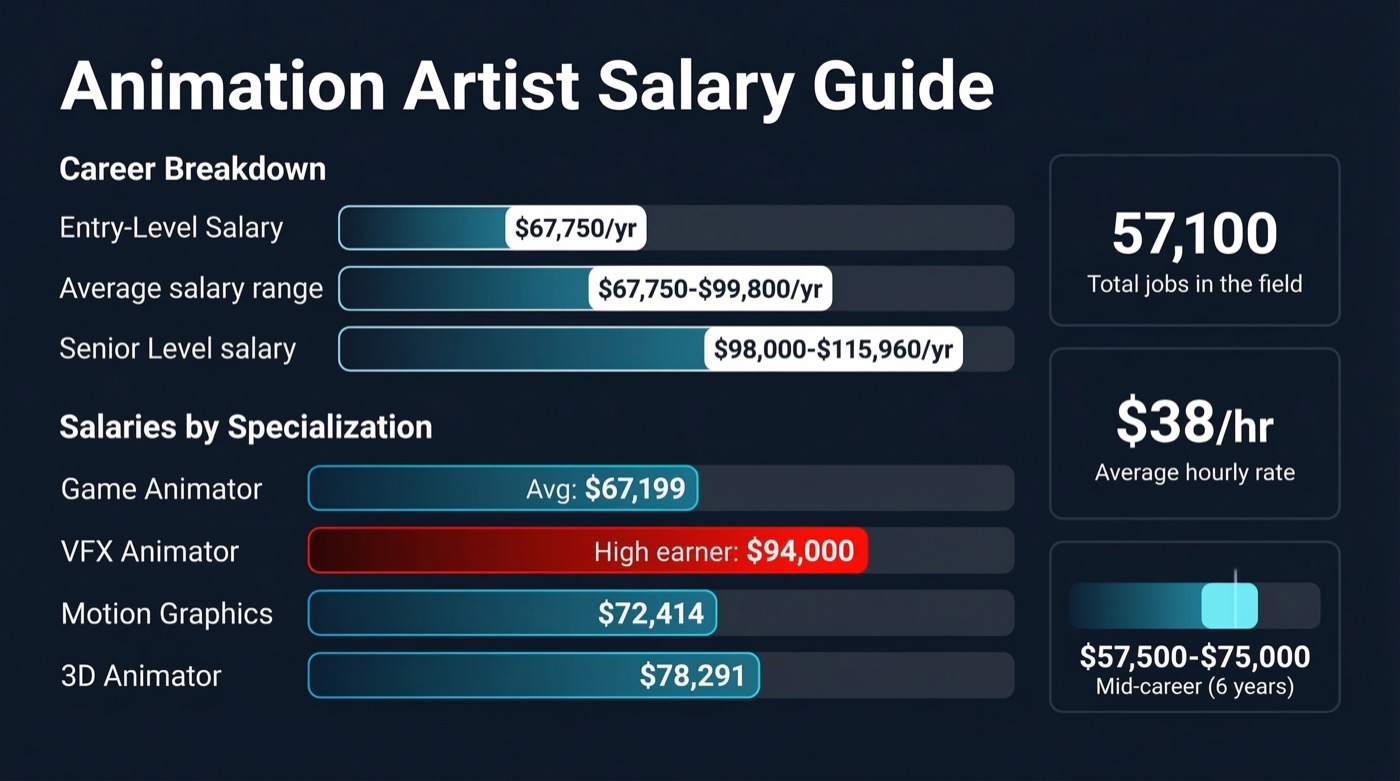
The Animation Artist Salary Guide 2026 reveals robust growth potential for creatives skilled in VR, gaming, and multimedia production. According to the latest data from Robert Half’s 2026 Salary Guide, entry-level animators start at $67,750, with specialized roles reaching median salaries of $99,800 or higher. These ranges reflect experience levels, portfolio quality, and emerging technology skills that are reshaping the industry.
This guide breaks down what you can expect to earn at each stage, how to increase your value, and which skills will set you apart in a competitive market.
Just starting out? Read the complete guide: How to Become an Animator.
Understanding the Animation Artist Salary Guide 2026 Landscape
The animation industry offers diverse earning potential across multiple sectors. Animation artists find opportunities across gaming, film, advertising, education, and emerging tech sectors.
Recent data from authoritative sources paints a comprehensive picture of current compensation. The Bureau of Labor Statistics reports a median salary of $99,800 for special effects artists and animators as of May 2024, with approximately 57,100 jobs in the field.
However, salaries vary significantly based on your career stage and specialization. Entry-level positions typically start lower, while experienced artists commanding niche skills see substantial increases.
Breaking Down the Numbers by Source
Different research organizations report varying ranges, reflecting the diversity of roles within animation. Robert Half’s 2026 data focuses on traditional animator positions with base salaries from $67,750 to $99,000 for high-performing professionals.
Meanwhile, PayScale’s crowdsourced data from over 100,000 surveys shows multi-media artist averages between $67,199 and $72,414. ERI’s salary research indicates an annual average of $78,291, or approximately $38 per hour.
These variations highlight how your specific role, industry sector, and geographic location dramatically impact your earning potential in 2026.
Salary Ranges by Experience Level
Your career stage plays the most significant role in determining your animation artist compensation. Understanding these tiers helps you set realistic expectations and plan your career trajectory.
| Experience Level | Years | Average Salary Range | Key Responsibilities |
|---|---|---|---|
| Entry-Level | 0-1 | $50,752 – $67,750 | Junior animator, assistant roles |
| Early Career | 1-4 | $55,810 – $79,750 | Project work, specialized tasks |
| Mid-Career | 5-9 | $67,199 – $94,000 | Lead animator, senior positions |
| Experienced | 10+ | $99,000 – $115,960+ | Art director, technical specialist |
Entry-Level Animation Artists
Starting your animation career typically means earning between $50,752 and $67,750 annually. These positions require a strong portfolio showcasing your technical skills and creative vision, even if you lack professional experience.
Entry-level roles reward artists with strong fundamentals and a focused portfolio. Building a portfolio with animal animation samples can help you stand out in these niche markets.
Most entry-level roles require a bachelor’s degree in animation, fine arts, or related fields, though exceptional self-taught artists with compelling portfolios can sometimes break in without formal education.
Mid-Career and Senior Positions
After gaining 3-6 years of experience, animation artists typically see their salaries jump to $57,500 or higher. Specialized roles in gaming, for example, can reach $75,000 for lead artists and technical specialists.
Senior positions and art directors command the highest salaries, often exceeding $110,000 annually. These roles require not just technical excellence but also leadership abilities, project management skills, and deep industry knowledge.
Your ability to specialize in high-demand areas like VR/AR, real-time rendering, or character rigging significantly impacts your advancement potential and earning power.
Industry-Specific Salary Variations
Where you work matters almost as much as what you do. Animation artists find opportunities across gaming, film, advertising, education, and emerging tech sectors, each with distinct compensation structures.
Gaming Industry Compensation
Game artists represent a significant segment of animation professionals. According to industry data, game artists with 0-3 years of experience average $45,000, with starting ranges from $35,000 to $50,000.
As you progress, gaming salaries climb substantially:
- 3-6 years experience: $57,500 average for standard artist roles
- Lead/Technical artists: $75,000 for specialized positions
- Art Directors: $110,000+ for leadership roles
The Entertainment Software Association reported industry average compensation hit $97,000 in 2016, and this figure has likely increased with the gaming boom and mobile game expansion.
Film and Special Effects
The film and special effects sector offers some of the highest compensation for animation artists. The BLS median of $99,800 primarily reflects this segment, where complex visual effects and character animation command premium rates.
Studios producing family entertainment and streaming content consistently need skilled character animators who can handle both realistic and stylized work.
Freelance opportunities in film can offer project-based rates that exceed salaried positions, though they come with less stability and require strong networking skills.
Emerging VR and AR Markets
Virtual and augmented reality represent the fastest-growing segments for animation artists in 2026. Robert Half specifically highlights VR skills as key differentiators for competitive candidates.
These emerging fields often pay premium rates for artists who can create immersive experiences. Motion designers in these spaces earn between $76,250 and $107,000, reflecting the specialized knowledge required.
Animation artists with VR/AR skills are well-positioned for roles in interactive media, training simulations, and immersive entertainment experiences.
How to Maximize Your Animation Artist Salary
Increasing your earning potential requires strategic career moves and continuous skill development. Follow these proven strategies to climb the salary ladder faster.
Build a Compelling Portfolio
Your portfolio is your most powerful salary negotiation tool. Robert Half emphasizes that portfolio quality directly influences compensation offers, often more than formal credentials.
Focus on showcasing diverse skills across multiple animation styles and software platforms. Include personal projects that demonstrate your passion and range, from character animation to environmental work or stylized motion graphics.
Update your portfolio regularly with your best recent work, removing outdated pieces that no longer represent your current skill level.
Master High-Demand Technical Skills
Certain technical competencies command salary premiums in 2026. Prioritize learning these valuable skills:
- 3D Modeling and Texturing: Specialists earn $60,250 to $91,750
- VR/AR Development: Emerging field with premium compensation
- Real-Time Rendering: Critical for gaming and interactive media
- Character Rigging: Technical skill that bridges animation and programming
- Motion Capture Integration: Increasingly important for realistic character work
Software proficiency in industry standards like Maya, Blender, Adobe AfterEffects, and Unity Pro significantly improves your marketability and salary potential.
Consider Strategic Career Moves
PayScale data suggests that switching employers often yields faster salary increases than waiting for annual raises. Strategic job changes every 2-3 years can accelerate your income growth substantially.
Alternatively, pursuing advanced degrees or certifications in specialized areas can justify higher compensation. Management tracks also offer increased earning potential, though they shift your focus from hands-on animation to team leadership.
Geographic relocation to animation hubs or negotiating remote positions with companies in high-paying markets can also boost your earnings without changing roles.
Job Outlook and Future Trends
Understanding where the animation industry is heading helps you position yourself for long-term success and salary growth.
Growth Projections Through 2034
The BLS projects 2% growth for multimedia artists and animators through 2034, which is slower than average across all occupations. However, this modest growth still translates to approximately 5,000 annual job openings due to replacement needs as professionals retire or change careers.
This steady demand means opportunities will continue, though competition may intensify. Building specialized skills in emerging technologies gives you an edge in this competitive landscape.
The content creation boom driven by streaming services, gaming expansion, and social media continues to fuel demand for skilled animation artists despite the modest overall growth rate.
Technology’s Impact on Salaries
Technological advancement creates both opportunities and challenges for animation artists. AI-assisted tools are changing workflows, but they haven’t replaced the need for creative human expertise.
Artists who embrace new technologies as enhancers rather than threats position themselves for higher compensation. The ability to work faster and produce higher-quality output using AI tools makes you more valuable, not less.
Specialization in areas requiring human creativity and emotional intelligence, like character development and storytelling, provides job security and salary stability regardless of technological changes.
Overcoming Common Career Challenges
Animation careers come with unique pressures that can impact both job satisfaction and earning potential. Understanding these challenges helps you navigate them successfully.
Managing Deadline Pressure
Animation projects operate on tight deadlines, often requiring long hours during crunch periods. This pressure can lead to burnout if not managed properly, potentially affecting your career longevity and advancement.
Successful artists develop efficient workflows, learn to set boundaries, and choose employers who prioritize sustainable working conditions. Companies with healthier work-life balance often retain talent longer and provide better career development opportunities.
Freelancers must be particularly careful about scope creep and revision cycles that can reduce effective hourly rates below salaried equivalents.
Navigating Feedback and Revisions
Animation requires incorporating extensive client and director feedback while maintaining creative vision. This balance becomes easier with experience but remains a core skill for career advancement.
Artists who handle feedback gracefully and iterate efficiently become more valuable team members. This soft skill often separates those who advance to leadership roles from those who plateau at mid-career levels.
Developing thick skin while remaining open to constructive criticism accelerates your skill development and increases your worth to employers.
Standing Out in a Competitive Field
Competition for top animation positions remains intense, particularly for desirable companies and projects. Differentiation becomes critical for salary negotiation leverage.
Find your niche within animation, whether that’s hyper-realistic animal characters, stylized motion graphics, or technical pipeline development. Specialists often command higher salaries than generalists, especially as you advance in your career.
Network actively within your target industry segment, attend conferences, and maintain an active online presence showcasing your work and expertise.
Regional Salary Variations
Geographic location significantly impacts animation artist compensation, with major metro areas typically offering higher salaries alongside increased living costs.
California and New York host major animation studios and advertising agencies, often paying 20-40% above national averages. Cities like Los Angeles, San Francisco, and New York City offer the most opportunities but demand premium living expenses.
Remote work opportunities have expanded since 2020, allowing some artists to earn coastal salaries while living in lower-cost regions. However, many studios still prefer in-house teams for collaborative projects.
Regional markets in Texas, Georgia, and North Carolina have grown their animation sectors, offering balanced compensation-to-cost-of-living ratios that appeal to early and mid-career professionals.
Conclusion: Your Path Forward in Animation
The Animation Artist Salary Guide 2026 reveals a field with solid earning potential for skilled, dedicated professionals. Whether you’re just starting at $50,000-$67,000 or aiming for six-figure specialist roles, clear pathways exist for career growth.
Key takeaways for maximizing your animation career earnings include building a portfolio that showcases diverse skills, mastering high-demand technologies like VR and 3D modeling, and strategically advancing through experience tiers from entry-level to senior positions. Specialization in growing sectors and willingness to adapt to new technologies position you for both job security and salary growth.
Remember that while industry growth is modest at 2%, approximately 5,000 annual openings ensure steady opportunities for talented artists who bring both technical excellence and creative vision to their work.
Consider learning from the journey of a freelance artist to understand how independent creatives navigate career progression, studio vs. freelance trade-offs, and the skills that opened doors for them.
If you work in motion design specifically, our motion designer salary guide covers compensation data for After Effects, Cinema 4D, and agency vs in-house roles.
Frequently Asked Questions
What is the average animation artist salary in 2026?
The average animation artist salary in 2026 ranges from $63,568 to $78,291 depending on the data source, with specialized roles like special effects artists earning a median of $99,800 according to the Bureau of Labor Statistics. Entry-level positions start around $50,752 to $67,750, while experienced professionals can earn $99,000 to over $115,000 annually. Your specific salary depends on experience level, specialization, industry sector, and geographic location.
How much do entry-level animation artists make?
Entry-level animation artists with less than one year of experience typically earn between $50,752 and $67,750 annually according to 2026 data. Game artists just starting out may see ranges from $35,000 to $50,000, averaging around $45,000 in their first three years. Building a strong portfolio, earning a relevant bachelor’s degree, and developing skills in high-demand software can help entry-level artists secure positions at the higher end of this range.
Which animation specializations pay the most?
The highest-paying animation specializations in 2026 include special effects artists and animators (median $99,800), motion designers ($76,250 to $107,000), and 3D modeling specialists ($60,250 to $91,750). Art directors in gaming can earn $110,000 or more, while VR/AR specialists command premium rates due to emerging demand. Technical artists who bridge animation and programming also earn above-average salaries. Film and special effects generally pay more than other sectors.
Do animation artists need a degree to earn competitive salaries?
While a bachelor’s degree in animation, fine arts, or related fields is strongly preferred by most employers, portfolio quality often matters more than formal education for salary determination. Robert Half emphasizes that compelling portfolios demonstrating technical proficiency and creative vision can outweigh credential gaps. However, degree holders typically have easier initial job placement and may advance faster. Advanced degrees or specialized certifications can justify higher compensation, particularly for management or specialized technical roles.
How can animation artists increase their salary?
Animation artists can increase their salaries through several strategies: developing specialized skills in high-demand areas like VR, 3D modeling, or character rigging; building a portfolio that demonstrates diverse capabilities and stays current; strategically switching employers every 2-3 years rather than waiting for internal raises; pursuing leadership or management tracks; and staying current with emerging technologies and software. Geographic relocation to animation hubs or securing remote positions with higher-paying companies also boosts earnings.
What is the job outlook for animation artists through 2034?
The Bureau of Labor Statistics projects 2% growth for multimedia artists and animators from 2024 to 2034, which is slower than the average for all occupations. Despite modest growth, approximately 5,000 annual job openings are expected due to replacement needs. Demand remains strong in gaming, streaming content, VR/AR development, and advertising. Artists with specialized technical skills and adaptability to new technologies will have the best opportunities. Competition will likely remain intense for positions at top studios and companies.
How do freelance animation artist salaries compare to full-time positions?
Freelance animation artists can potentially earn higher effective hourly rates than salaried positions, particularly for specialized project work or when working with multiple clients. However, freelancers face income variability, lack of benefits, and need to account for self-employment taxes and business expenses. Full-time positions offer stability, health insurance, retirement benefits, and predictable income. Successful freelancers often earn 25-50% more per hour to compensate for these factors, but actual annual income depends heavily on consistent client acquisition and project flow.
Looking for work? Browse open animation jobs on ArtBlast, updated daily.
Related: What Does an Animator Do? | Creative Director Salary Guide
Use the free Artist Salary Calculator to look up pay ranges for your role and country.
See the full guide: Animator Career Path.