Imagine earning over $109,000 annually while crafting beautiful, intuitive digital experiences that millions of users interact with daily. That’s the reality for UI/UX artists in 2026, a profession where creative artistry meets user-centered design principles.
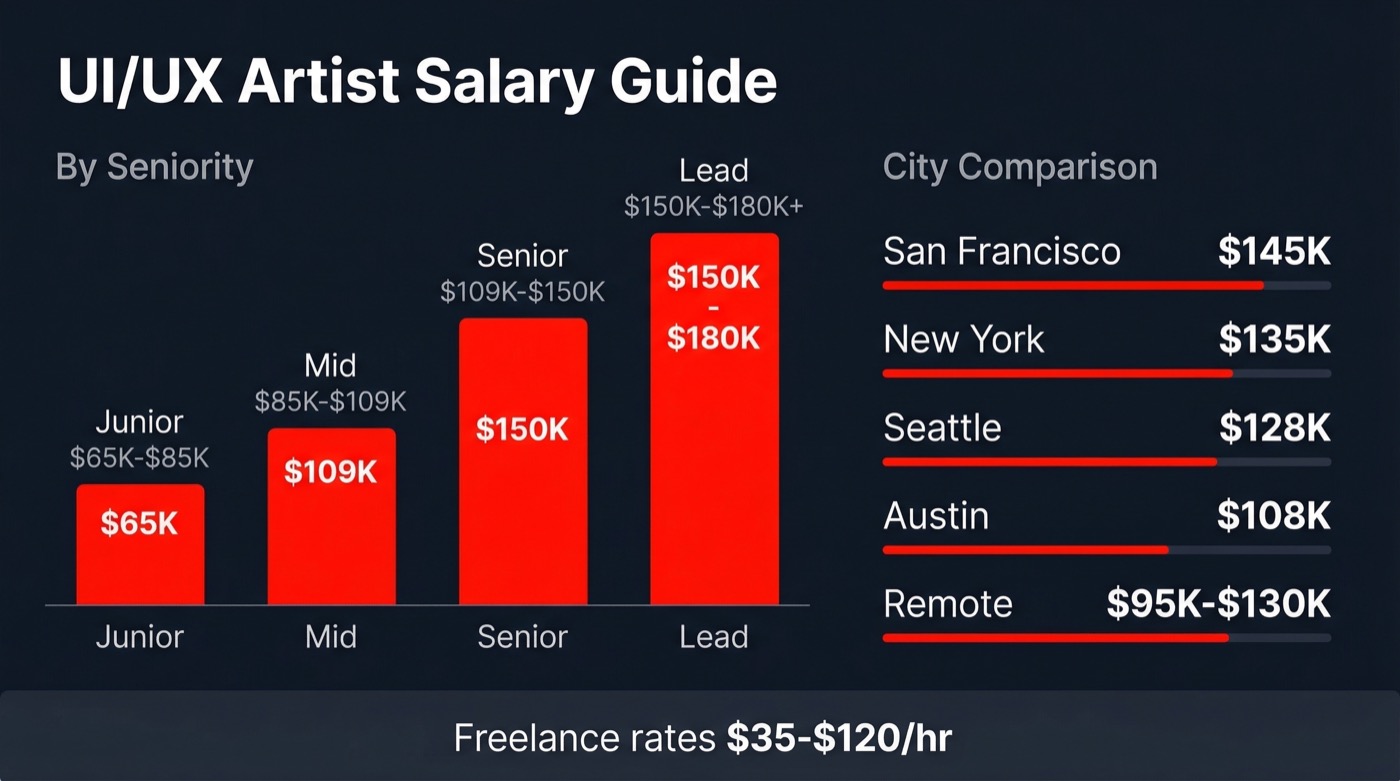
The UI/UX artist salary guide reveals that professionals in this field command median salaries between $109,000 and $114,000 in the United States, with senior-level artists earning upwards of $180,000. This represents a significant premium over the general US median salary of $49,500, reflecting the specialized skills and high demand for intuitive digital experiences across tech-driven industries.
Whether you’re a digital artist considering a transition into UI/UX design, negotiating your next offer, or planning your career trajectory, understanding salary benchmarks by experience level, location, and specialization is essential. According to Coursera’s 2026 salary data, the market continues to reward professionals who blend artistic vision with functional design expertise. This guide breaks down exactly what you can expect to earn and how to maximize your compensation in this thriving field.
Understanding the UI/UX Artist Role and Salary Landscape
The term “UI/UX artist” represents a hybrid position that merges traditional design artistry with user experience principles. Unlike pure UX researchers or product designers, UI/UX artists bring visual storytelling, motion design, and illustration skills to interface creation.
This unique skill set commands premium compensation. The median total pay for UX designers sits at $109,000, while UI designers average $114,000 annually. UX researchers, who focus more on data and testing, earn approximately $119,000, demonstrating how specialized roles within the field command different rates.
The salary landscape has evolved significantly due to three key factors: increased digitization across industries, the rise of remote work enabling global talent competition, and AI integration requiring sophisticated interface design. These trends have created a seller’s market for skilled UI/UX artists with 3-5% projected growth through 2026.
UI/UX Artist Salary Guide by Experience Level
Your experience level dramatically impacts earning potential in the UI/UX field. Here’s what you can expect at each career stage.
Entry-Level UI/UX Artists (0-2 Years)
Digital artists just entering the UI/UX field typically earn between $62,500 and $95,000 annually. Junior professionals command hourly rates of $50 to $75 for freelance projects. In top-tier markets like San Francisco, entry-level salaries jump to $101,000 to $139,000, reflecting the premium coastal companies pay for talent.
Building a strong portfolio during these early years is critical. Employers prioritize demonstrable skills over credentials, making case studies and real-world project examples your most valuable assets.
Mid-Level UI/UX Professionals (3-5 Years)
With three to five years of experience, UI/UX artists see substantial compensation growth. Mid-level professionals earn between $92,500 and $114,000, with many breaking the six-figure threshold. This stage represents the sweet spot where you’ve developed specialized skills but haven’t yet plateaued in earning potential.
At this level, professionals often specialize in areas like motion design, mobile interfaces, or design systems, which can command premium rates depending on market demand.
Senior and Principal-Level Artists (6+ Years)
Senior UI/UX artists with six or more years of experience earn between $135,000 and $160,000, with many positions reaching $180,000 or more. Principals and design directors command exceptional compensation, with salaries hitting $253,000 at major tech companies.
Hourly rates for senior freelancers range from $100 to over $150, reflecting the strategic value they bring to projects. These professionals often lead design teams, establish design systems, and make critical product decisions that impact millions of users.
| Experience Level | Years | Salary Range | Hourly Rate (Freelance) |
|---|---|---|---|
| Entry-Level | 0-2 | $62,500 – $95,000 | $50 – $75 |
| Mid-Level | 3-5 | $92,500 – $114,000 | $75 – $100 |
| Senior | 6-10 | $135,000 – $160,000 | $100 – $150 |
| Principal/Director | 10+ | $180,000 – $253,000 | $150+ |
Geographic Location Impact on UI/UX Artist Earnings
Where you work significantly influences your earning potential. The cost of living, concentration of tech companies, and local demand create substantial geographic salary variations.
Top-Paying US Cities for UI/UX Artists
San Francisco leads the nation with junior UI/UX artists earning $101,000 to $139,000 and senior professionals commanding $120,000 to $169,000. The Bay Area’s concentration of tech giants and well-funded startups drives these premium rates.
New York City offers competitive compensation, with salaries ranging from $80,000 for juniors to $152,000 for senior artists. The city’s diverse industries, from finance to fashion tech, create consistent demand for UI/UX talent.
Boston provides strong earning potential at $82,000 to $139,000 across experience levels. The city’s biotech and healthcare technology sectors particularly value user-centered design for complex applications.
International Salary Benchmarks
Global markets offer varied compensation structures. In the United Kingdom, UI/UX artists average £55,681 (approximately $70,000 USD) with projections showing 3% annual growth. London specifically offers juniors £39,000 to £54,000, lower than US equivalents but with different cost-of-living dynamics.
Sydney, Australia presents competitive rates with juniors earning AUD $82,000 to $117,000 (roughly $55,000 to $79,000 USD). Remote work has increasingly allowed UI/UX artists to work for high-paying US companies while living in lower-cost international locations, optimizing both compensation and lifestyle.
Industry-Specific Salary Variations
The industry you choose dramatically affects your compensation package. Different sectors value UI/UX expertise differently based on their digital maturity and profit margins.
Technology Sector
Tech companies offer $70,000 to $150,000+ for UI/UX artists, often including substantial stock options and bonuses. Software-as-a-Service (SaaS) companies particularly value interface design as a competitive differentiator, leading to premium compensation.
Finance and Fintech
Financial services command the highest premiums at $80,000 to $160,000+ due to complex interface requirements for trading platforms, banking apps, and financial dashboards. The consequences of poor UX in finance are severe, driving companies to invest heavily in top talent.
Healthcare and E-Commerce
Healthcare organizations pay $60,000 to $130,000, with growing demand for user-friendly medical applications and patient portals. E-commerce companies offer $65,000 to $140,000, recognizing that intuitive interfaces directly impact conversion rates and revenue.
The surge in telemedicine and digital health solutions has created particular demand for UI/UX artists who understand accessibility requirements and regulatory compliance alongside design principles.
Company Size and Employment Type Considerations
Your employer’s size and structure significantly impact both base salary and total compensation packages.
Startups vs. Established Corporations
Startups typically offer $55,000 to $100,000 in base salary but sweeten deals with equity packages. Early-stage company stock options can be lucrative if the company succeeds, but they carry substantial risk. You’re often wearing multiple hats and gaining diverse experience quickly.
Large corporations provide $80,000 to $160,000+ with comprehensive benefits including health insurance, 401(k) matching, and professional development budgets. The trade-off is more specialized roles and potentially slower career progression due to organizational hierarchy.
Freelance and Contract UI/UX Artists
Freelance UI/UX artists average $134,000 in total pay, with base compensation around $99,608 plus project bonuses. The flexibility allows you to select high-value projects and potentially earn more than salaried positions, but requires managing your own benefits, taxes, and client acquisition. For those considering this path, understanding the journey of a freelance artist can provide valuable insights into building a successful independent career.
Contract positions offer hourly rates that translate to premium annual equivalents when fully booked, but the lack of job security and benefits must factor into your financial planning.
How to Maximize Your UI/UX Artist Salary
Strategic career moves can significantly increase your earning potential beyond natural progression. Here’s how to optimize your compensation.
Step 1: Develop High-Demand Specializations
Focus on skills with supply-demand imbalances. Motion design for interfaces, design systems architecture, and accessibility expertise command premiums. AI-assisted design tools are emerging, and early proficiency positions you as an expert in this evolving space.
Step 2: Build a Compelling Portfolio
Curate 5-7 case studies demonstrating your process, not just final designs. Show problem identification, user research integration, iteration, and measurable impact. Include metrics like increased conversion rates or reduced user error rates when possible. Professional tools like Adobe Photoshop remain essential for creating polished interface mockups and design assets that showcase your capabilities.
Step 3: Leverage Location Strategically
Consider remote positions with companies in high-paying markets while living in lower-cost areas. A San Francisco salary in a mid-tier city dramatically improves your quality of life and savings potential.
Step 4: Negotiate Total Compensation
Look beyond base salary. Signing bonuses average $9,000 to $40,000 in additional cash compensation. Stock options, particularly at growth-stage companies, can substantially increase total earnings. Performance bonuses, professional development budgets, and flexible work arrangements all have monetary value.
Step 5: Pursue Strategic Certifications
While portfolios matter most, certifications from recognized institutions like the Interaction Design Foundation or Google UX Design Certificate can boost mid-level negotiations by 5-15%. They’re particularly valuable when transitioning from related fields like graphic design.
Future Outlook: AI and Market Trends
The UI/UX artist salary guide for 2026 reflects a market in transition. Artificial intelligence tools are augmenting design workflows, raising questions about future compensation trends.
Senior UI/UX artists will likely see increased value as AI handles routine tasks, allowing them to focus on strategic design thinking and complex problem-solving. Entry-level positions may face more competition as AI democratizes basic interface creation, making strong portfolios even more critical for breaking into the field.
Industries experiencing the fastest growth include healthcare technology, financial services, and e-commerce. These sectors are investing heavily in digital transformation and recognize that superior UX provides competitive advantage. Remote work normalization continues expanding the talent pool while allowing professionals to optimize their location-to-salary ratios.
Key Takeaways for Digital Artists
This UI/UX artist salary guide reveals a robust market for professionals who combine artistic vision with user-centered design principles. With median salaries between $109,000 and $114,000, and senior roles exceeding $180,000, the field offers substantial earning potential for digital artists willing to develop specialized skills.
Geographic location, industry selection, and experience level create significant compensation variations. San Francisco and finance sectors lead in pay, while remote work increasingly allows optimization of salary-to-cost-of-living ratios. Strategic specialization in emerging areas like design systems and AI-assisted workflows positions you for continued career growth.
Whether you’re negotiating your next offer or planning long-term career development, understanding these benchmarks empowers you to make informed decisions. The combination of strong portfolios, specialized skills, and strategic positioning in high-demand sectors maximizes your earning potential in this thriving field. For those exploring different artistic career paths, comparing opportunities across 3D artist salary ranges can provide valuable perspective on the broader digital art landscape.
Looking for a UI/UX art job? ArtBlast curates 10-60+ game art jobs daily, including UI artist roles. Subscribe at artblast.co/subscribe and apply while the role is still fresh.
Frequently Asked Questions
What is the average salary for a UI/UX artist in 2026?
The average UI/UX artist salary in the United States ranges from $109,000 to $114,000 annually, depending on whether you specialize more in UX or UI design. Entry-level positions start around $62,500 to $95,000, while senior professionals with 6+ years of experience earn $135,000 to $180,000 or more. Location significantly impacts these figures, with San Francisco and New York offering substantially higher compensation than national averages.
Do UI/UX artists make more than traditional graphic designers?
Yes, UI/UX artists typically earn 40-60% more than traditional graphic designers due to their specialized skills in user research, interaction design, and digital product development. While graphic designers average $50,000 to $65,000 annually, UI/UX artists command $109,000+ median salaries. The premium reflects the strategic business value of user-centered design and the technical knowledge required to create functional digital interfaces beyond visual aesthetics.
Which industries pay UI/UX artists the highest salaries?
Finance and fintech lead in UI/UX artist compensation, offering $80,000 to $160,000+ due to complex interface requirements and high stakes of financial applications. Technology sector companies follow closely at $70,000 to $150,000+, often supplemented with stock options. E-commerce companies pay $65,000 to $140,000, recognizing that superior UX directly impacts conversion rates. Healthcare, while growing rapidly, currently offers $60,000 to $130,000, representing strong opportunity as digital health expands.
Is freelancing more profitable than full-time employment for UI/UX artists?
Freelance UI/UX artists average $134,000 in total compensation compared to $109,000 for full-time employees, but this doesn’t account for self-employment taxes, health insurance costs, and inconsistent project flow. Experienced freelancers charging $100-150+ hourly can significantly exceed employee earnings, but must manage business operations, client acquisition, and benefits independently. The choice depends on your risk tolerance, business acumen, and preference for autonomy versus stability.
How does remote work affect UI/UX artist salaries?
Remote work has created geographic salary arbitrage opportunities where UI/UX artists can earn San Francisco or New York salaries while living in lower-cost areas. Some companies adjust compensation based on location, reducing salaries by 10-20% for remote workers outside major metros. However, the overall trend favors employees, with competition for talent pushing many organizations toward location-agnostic pay scales. Remote positions also increase access to high-paying opportunities previously limited by geography.
What certifications or education boost UI/UX artist salaries?
Portfolio quality matters more than credentials in UI/UX, but strategic certifications can boost salaries by 5-15%, particularly when transitioning from related fields. Google UX Design Certificate, Interaction Design Foundation courses, and Nielsen Norman Group certifications carry industry recognition. Bachelor’s degrees in design, HCI, or related fields provide foundational credibility, but many successful UI/UX artists are self-taught. Demonstrable skills through case studies showing user research, iteration, and measurable impact outweigh formal education in salary negotiations.
Will AI tools reduce UI/UX artist salaries in the future?
AI tools are more likely to elevate senior UI/UX artist salaries while increasing competition at entry levels. As AI handles routine design tasks, strategic thinking, user empathy, and complex problem-solving become more valuable, skills that senior professionals possess. Entry-level artists may face more competition as barriers to basic interface creation lower, making exceptional portfolios critical. Overall, the 3-5% projected growth through 2026 suggests AI will augment rather than replace UI/UX artists, shifting roles toward higher-value strategic work.