Imagine building sprawling fantasy kingdoms, post-apocalyptic wastelands, or photorealistic cityscapes that millions of players explore daily. Environment artists make this happen, yet many aspiring creators wonder: what does the actual career progression look like beyond landing that first job?
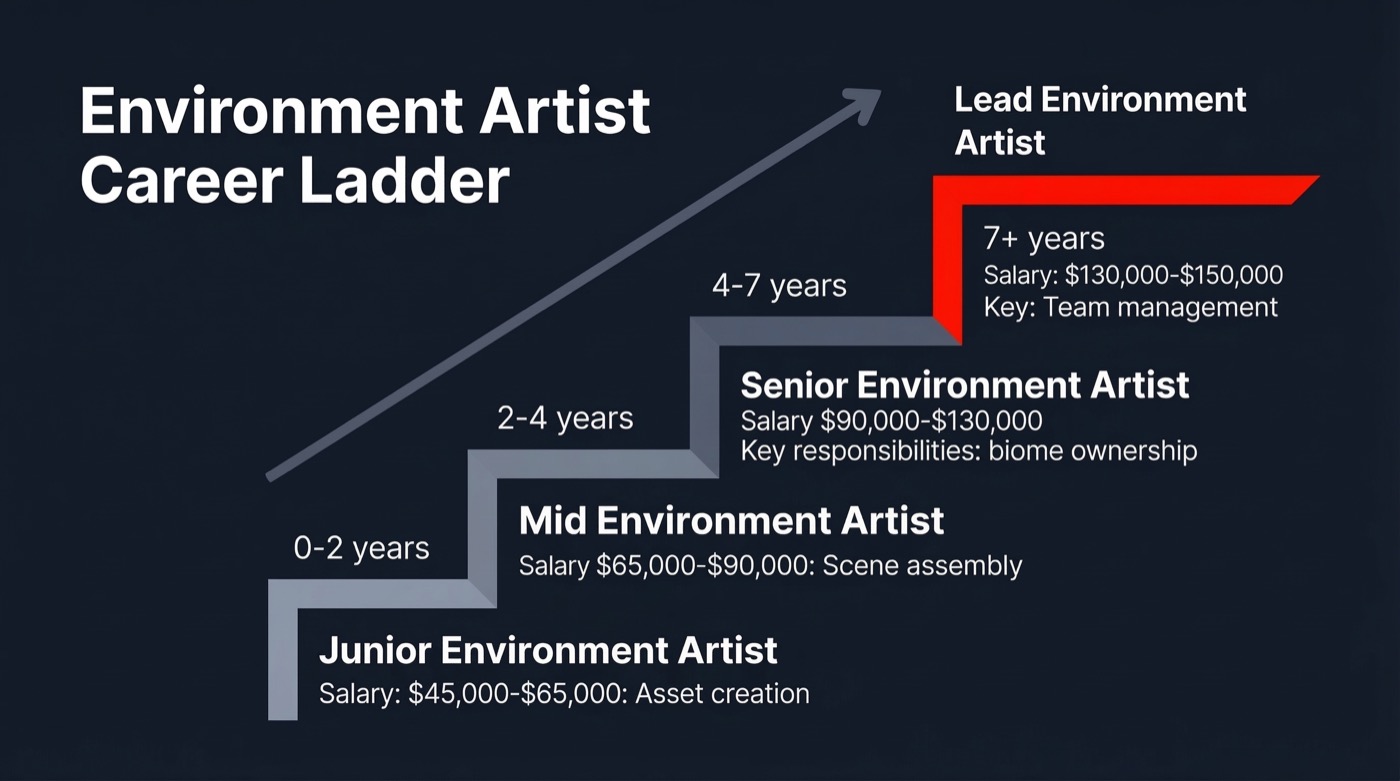
The environment artist career path explained follows a structured ladder from junior asset creation (0-2 years) through mid-level scene assembly (2-4 years) to senior biome ownership (4-7+ years), with options for lead management or specialized technical roles. Unlike traditional careers, advancement relies on portfolio strength and skill mastery rather than formal degrees, with faster progression in smaller studios.
Whether you’re considering this creative path or mapping your next promotion, understanding the milestones, required skills, and alternative tracks will help you navigate this booming industry. With interactive media projected to grow exponentially by 2026 according to industry career guides, now is the ideal time to chart your journey.
Understanding the Environment Artist Role
Environment artists craft the 3D worlds where stories unfold in games, films, and virtual experiences. This role blends artistic vision with technical execution, requiring you to build everything from individual props to complete ecosystems.
Your daily work involves creating assets in software like Maya or Blender, texturing surfaces in Substance 3D Painter, and integrating scenes into game engines like Unity Pro or Unreal. You’ll collaborate with level designers, lighting artists, and technical teams to ensure your environments perform smoothly while maintaining visual impact.
The position demands both macro thinking (how does this forest feel as a whole?) and micro attention (are these rock textures optimized for real-time rendering?). This dual focus separates environment artists from pure 3D artists or concept artists.
Environment Artist Career Path Explained: The Complete Progression
Your journey through environment art follows distinct stages, each with specific responsibilities and skill requirements. Here’s what to expect at each level.
Junior Environment Artist (0-2 Years)
Starting positions focus on supervised asset creation under senior guidance. You’ll model individual props, apply textures, and learn studio pipelines while receiving regular feedback on your work.
Key responsibilities include:
- Creating 3D models of furniture, vegetation, rocks, and architectural elements
- Texturing assets using PBR (physically-based rendering) workflows
- Implementing finished assets into game engines
- Following established art direction and technical specifications
This stage builds your foundation in industry-standard tools and workflows. Expect to iterate frequently as you develop speed and quality simultaneously.
Mid-Level Environment Artist (2-4 Years)
With proven skills, you’ll tackle broader projects with less oversight. Mid-level artists create modular asset kits, assemble complete scenes, and begin influencing visual direction.
Your expanded scope includes building reusable tileable textures, developing material libraries, and ensuring visual consistency across larger areas. You’ll also start mentoring newer team members informally.
This phase tests your ability to balance artistic quality with technical constraints like polygon budgets and memory limitations. Mastering optimization becomes crucial for advancement.
Senior Environment Artist (4-7 Years)
Senior roles involve owning entire biomes or major locations from concept to completion. You’ll establish visual benchmarks, mentor junior artists formally, and master advanced techniques like procedural generation.
According to industry veterans on Polycount, this stage represents a critical decision point. Do you pursue management, specialize technically, or continue as a hands-on expert?
Senior artists typically handle the most challenging assets, solve complex technical problems, and contribute to pipeline development. Your work sets the quality bar for the entire team.
Lead and Beyond (7+ Years)
Lead environment artists manage teams, coordinate with other departments, and ensure projects stay on schedule and vision. This role shifts focus from creation to direction, reviewing work, and resolving production challenges.
Alternative paths include Principal Artist (10+ years) positions where you drive technical innovation as an individual contributor, or Art Director roles (12+ years) setting studio-wide visual strategy. Some veterans transition to technical art, pipeline research, or launch independent studios.
Essential Skills for Career Advancement
Progressing through the environment artist career path requires continuously expanding your technical and artistic toolkit. Let’s break down the critical competencies.
Core Technical Skills
3D modeling and sculpting form your foundation. You’ll need proficiency in polygon modeling for game-ready assets and high-resolution sculpting for detail generation.
Texturing and materials bring surfaces to life. Mastering Substance Painter, Designer, or similar tools for creating realistic (or stylized) materials proves essential across all levels.
Game engine integration separates environment artists from general 3D artists. Understanding Unreal Engine’s Blueprint system or Unity’s prefab workflows enables you to implement interactive elements beyond static scenery.
Emerging Technical Trends
| Technology | Application | Career Impact |
|---|---|---|
| Procedural Generation | Creating variation through algorithms | Required for senior+ roles |
| Photogrammetry | Capturing real-world assets via photography | Increasingly common workflow |
| Real-time Ray Tracing | Next-gen lighting techniques | Emerging requirement for AAA studios |
| AI-Assisted Workflows | Accelerating texture/asset creation | Future-proofing skillset |
Artistic Fundamentals
Technical prowess means nothing without strong artistic judgment. Composition, color theory, and environmental storytelling determine whether your worlds feel believable and emotionally resonant.
Studying architecture, nature photography, and film cinematography strengthens your visual library. The best environment artists understand why certain color palettes evoke specific moods or how architectural styles communicate cultural context.
Optimization skills also matter artistically. Learning to achieve maximum visual impact within technical budgets separates competent artists from exceptional ones who ship projects successfully.
How to Break Into Environment Art
Entry into this field prioritizes portfolio quality over formal credentials. Here’s your practical roadmap for landing that first role.
Step 1: Build a Focused Portfolio
Create 3-5 complete environment pieces that showcase diverse skills. Include at least one modular kit demonstrating reusability, one organic environment showing natural texturing, and one architectural scene proving technical precision.
Quality trumps quantity always. According to CG Spectrum career guides, recruiters spend under two minutes reviewing portfolios initially, so lead with your strongest work.
Step 2: Leverage Contests and Community
Participate in challenges through platforms like The Rookies, ArtStation, or Polycount. These provide structured feedback, networking opportunities, and portfolio pieces with built-in visibility.
Engage actively in online communities by sharing work-in-progress, requesting critiques, and helping others. Many hiring managers scout these platforms for emerging talent before posting formal openings.
Step 3: Choose Your Educational Path
Options include:
- Bachelor’s degree in Game Art, 3D Animation, or related fields (3-4 years, structured learning)
- Specialized bootcamps like CGMA or Gnomon (6-12 months, intense portfolio focus)
- Self-taught routes using online tutorials, courses, and mentorships (timeline varies, requires discipline)
Studios care more about what you can create than how you learned. A self-taught artist with an exceptional portfolio beats a degree-holder with mediocre work every time.
Step 4: Target Strategic First Roles
Smaller studios often provide broader responsibilities and faster advancement than AAA companies. Your first shipped title matters significantly, regardless of studio size.
Consider adjacent entry points if direct environment artist roles prove elusive. Props artist, junior modeler, or QA positions with art contributions can provide internal pathways.
Navigating Long-Term Career Sustainability
One question concerns many aspiring environment artists: what happens after you reach senior levels? Can you sustain a hands-on career, or does management become mandatory?
The Individual Contributor Track
Principal artist and technical artist roles allow continued hands-on work without managing teams. These positions focus on innovation, tool development, and solving the hardest artistic or technical challenges.
Real discussions from veteran artists on Polycount reveal that many professionals in their 40s and 50s thrive by pivoting to pipeline research, technical direction, or specialized roles like photogrammetry expert.
This path requires staying current with emerging technologies and developing expertise that justifies senior-level compensation without management responsibilities. Continuous learning becomes your career insurance.
Alternative Career Pivots
Environment artists possess transferable skills valuable across industries. Common transitions include moving between games and film VFX, shifting to architectural visualization, or entering virtual production for television.
Some establish independent studios, create asset packs for marketplaces, or teach while maintaining freelance client work. These options provide autonomy and diverse income streams.
Level design represents another natural pivot, leveraging your spatial thinking and engine knowledge while shifting from asset creation to gameplay space design.
Addressing Age and Career Longevity
While some forum discussions mention the field skewing younger, this reflects rapid industry growth rather than systematic ageism. Experienced artists who adapt to new tools and workflows remain highly valued.
The key is evolving your value proposition. Junior artists compete on speed and affordability, while veterans offer judgment, mentorship, and the ability to tackle complex problems efficiently.
Many successful long-term careers involve periodic reinvention – moving from modeling to lighting, from games to VR experiences, or from production to education. Flexibility matters more than linear progression.
Maximizing Your Advancement Speed
Want to progress faster through the environment artist career path? These strategies accelerate growth regardless of your current level.
Develop Cross-Disciplinary Knowledge
Understanding lighting, level design, and technical art makes you more valuable and promotable. Senior artists succeed partly through seeing how their work integrates with other disciplines.
Learn basic scripting in Python or Blueprint visual scripting. Even modest programming knowledge helps you create procedural tools that multiply your productivity.
Seek Diverse Project Types
Working across stylized and realistic projects, indoor and outdoor environments, and different genres (fantasy, sci-fi, historical) expands your range and portfolio appeal.
Volunteer for challenging assignments that push your skills. The difficult projects that others avoid often provide the best learning opportunities and visibility with leadership.
Build a Personal Brand
Share your process through social media, write breakdowns of your work, and present at local meetups or online conferences. Visibility within the community creates opportunities that don’t appear on job boards.
Helping others through tutorials or mentoring establishes your expertise while deepening your own understanding. Teaching forces you to articulate principles you may have internalized unconsciously.
Industry Outlook and Future Opportunities
The environment artist career path continues expanding as interactive media permeates more sectors. Beyond traditional games and film, opportunities emerge in virtual reality, augmented reality, virtual production, and metaverse platforms.
Next-generation technologies like Unreal Engine 5’s Nanite and Lumen systems change workflows while increasing visual fidelity expectations. Artists who master these tools position themselves at the forefront of industry evolution.
Remote work opportunities have expanded dramatically, allowing talent to access opportunities globally without relocating to traditional industry hubs. This democratization benefits artists in smaller markets or with geographic constraints.
Key Takeaways
The environment artist career path explained reveals a structured yet flexible progression built on continuous skill development and portfolio strength. Success requires balancing artistic vision with technical constraints while adapting to rapidly evolving tools and workflows.
Your advancement depends more on what you create than formal credentials, with multiple viable tracks beyond traditional management for long-term sustainability. Whether you aim for hands-on principal roles, technical specialization, or creative leadership, opportunities abound for artists committed to lifelong learning.
Start by building a focused portfolio, engage with the community actively, and embrace emerging technologies. The environment artist career path offers creative fulfillment and strong prospects for those ready to invest in their craft.
Frequently Asked Questions
How long does it take to become a senior environment artist?
Most environment artists reach senior level after 4-7 years of professional experience. This timeline varies based on studio size, project complexity, and individual skill development speed. Smaller studios often provide faster advancement due to broader responsibilities, while AAA companies may have more structured progression paths. Consistent portfolio development and mastering advanced techniques like procedural generation accelerate this timeline.
Do I need a degree to become an environment artist?
No formal degree is required, though many artists hold Bachelor’s degrees in Game Art or related fields. Studios prioritize portfolio quality over educational credentials. Self-taught artists who demonstrate strong skills through completed projects compete equally with degree-holders. Alternative paths include specialized bootcamps, online courses, and mentorship programs that focus specifically on portfolio development for industry standards.
What software should I learn first as an aspiring environment artist?
Start with a 3D modeling package like Blender (free) or Maya (industry standard), a texturing tool like Substance Painter, and a game engine such as Unreal Engine or Unity. This combination covers the core pipeline from creation to implementation. Add sculpting software like ZBrush as you progress. Focus on mastering fundamentals in one tool before expanding, as principles transfer across similar software.
Can environment artists work remotely or freelance?
Yes, remote opportunities have expanded significantly, especially post-2020. Many studios now hire environment artists for fully remote positions or hybrid arrangements. Freelancing is viable for experienced artists with strong networks and self-management skills, though junior artists benefit from in-studio mentorship. Freelancers often create asset packs, work on contract for multiple studios, or combine client work with teaching.
What is the salary range for environment artists?
Salaries vary widely by experience, location, and studio size. Junior environment artists typically earn between $45,000-$65,000 annually in the United States, mid-level artists $65,000-$90,000, and senior artists $90,000-$130,000+. Lead and principal positions can exceed $150,000 in major markets or AAA studios. Freelancers set their own rates, typically charging $25-$100+ per hour depending on expertise and project scope.
How do I stay relevant as an environment artist long-term?
Continuous learning is essential for career longevity. Stay current with emerging technologies like real-time ray tracing, procedural generation, and AI-assisted workflows. Diversify skills into adjacent areas like technical art, lighting, or level design. Engage with the community through forums, conferences, and social media to track industry trends. Consider pivoting to specialized roles like photogrammetry expert or pipeline technical director as you gain experience.
What is the difference between environment artists in games versus film?
Game environment artists optimize assets for real-time rendering with strict polygon budgets and performance constraints, often creating modular, reusable assets. Film environment artists work with higher-resolution models for pre-rendered output, focusing on photorealism without real-time limitations. Games require engine integration knowledge, while film demands understanding of rendering pipelines like Arnold or V-Ray. Skills transfer between industries, though workflows and priorities differ significantly.
For salary expectations at each stage, see the Environment Artist Salary Guide.
For a detailed breakdown of what environment artists do day-to-day and which skills matter most, read the complete environment artist career guide.
Looking for work? Browse open environment artist jobs on ArtBlast, updated daily.