Picture this: a 3D artist in San Jose, California earns $160,450 annually while someone with similar skills in another state makes half that amount. The 3D art industry has exploded in 2026, creating dramatic pay differences that could cost you thousands if you don’t understand the landscape.
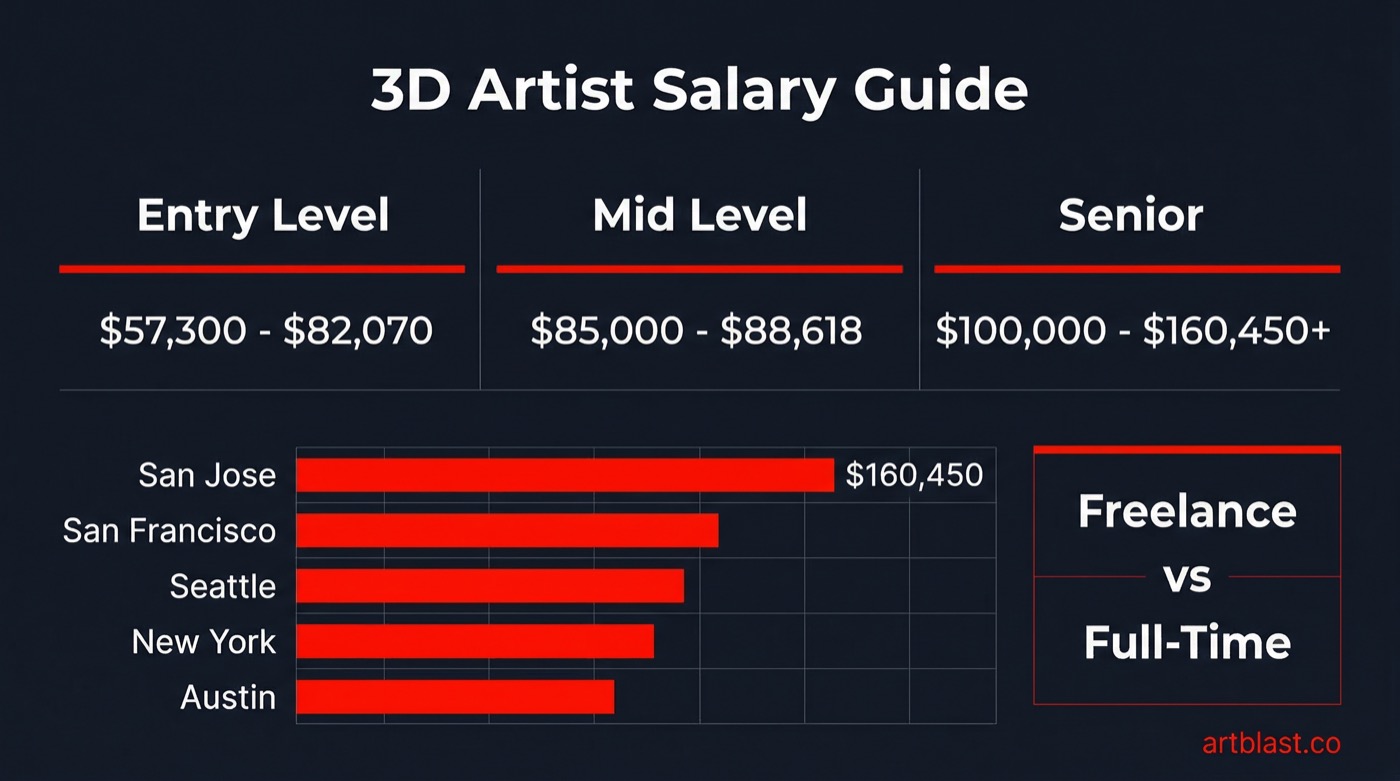
The 3D Artist Salary Guide reveals that average compensation ranges from $57,300 to $88,618 in the United States, with entry-level positions now starting at $82,070. These numbers reflect surging demand from gaming studios, film production companies, and tech firms racing to develop VR and AR experiences.
Whether you’re considering a career switch, negotiating your next contract, or building a freelance portfolio, understanding salary benchmarks helps you maximize earning potential. This guide breaks down pay by experience level, location, specialization, and employment type so you can make informed decisions about your 3D art career. According to Salary.com’s March 2026 data, the industry continues evolving with new opportunities emerging monthly.
Average 3D Artist Salary in 2026
The baseline numbers tell an interesting story. Multiple authoritative sources paint a consistent picture of what 3D artists do and earn across the United States.
According to March 2026 data, the average 3D artist salary sits between $85,366 and $88,618 annually. However, this figure varies significantly based on job title and data collection methods.
Here’s what the numbers look like across different sources:
- Salary.com: $85,366 to $88,618 (March 2026 update)
- ZipRecruiter: $82,070 for entry-level positions
- PayScale: $67,761 average (based on crowdsourced data)
- VelvetJobs: $57,300 for 3D Designers specifically
- Robert Half: $60,250 to $91,750 for 3D Modelers
The hourly breakdown ranges from $16.60 on the low end to $41 for experienced professionals. Most 3D artists working full-time positions earn between $27 and $49 per hour, representing the 25th to 75th percentile.
Understanding Salary Range Variations
Why do these numbers differ so dramatically? The title matters more than you might think.
A “3D Designer” typically earns less than a “3D Artist,” who earns less than a “Lead 3D Artist.” Specialized roles like 3D Modelers command different rates than generalist positions. The data collection method also influences results, with real-time job posting aggregators showing higher figures than crowdsourced self-reported salaries.
3D Artist Salary by Experience Level
Your years in the industry directly impact your paycheck. The progression follows a predictable but rewarding path.
Entry-level 3D artists with less than one year of experience start at $49,488 to $82,070 annually. The 25th percentile sits at $56,500, meaning a quarter of beginners earn less than this threshold.
| Experience Level | Years | Average Salary | Salary Range |
|---|---|---|---|
| Entry-Level | <1 year | $49,488 – $82,070 | 25th percentile: $56,500 |
| Early Career | 1-4 years | $60,989 | $55,000 – $72,000 |
| Mid-Career | 5-9 years | $75,000 – $85,000 | Approaching 75th percentile |
| Experienced | 10+ years | $97,485+ | 75th percentile and above |
| Lead/Senior | 10+ years | $81,331 – $160,450 | Location-dependent highs |
Early career professionals with one to four years of experience average $60,989. This represents a solid jump from entry-level compensation and reflects growing portfolio strength and technical proficiency.
Mid-career 3D artists see compensation climb toward the 75th percentile mark of $97,485. At this stage, specialization choices and industry focus significantly influence earnings.
Senior and Lead Position Compensation
Lead 3D artists occupy the upper echelon of the pay scale. The national average for lead positions sits at $81,331, but this figure masks dramatic geographic variation.
In premium markets like San Jose, California, lead 3D artists command $160,450 annually. That’s 97% above the national average and reflects both cost of living adjustments and concentration of high-paying tech companies.
Some exceptional senior positions reach $364,659, though these extreme outliers typically involve equity compensation, profit sharing, or leadership roles at major studios.
Location Impact on 3D Artist Salaries
Geography determines your earning potential as much as your skill set. A $40,000 difference exists between top and bottom markets.
The highest-paying cities for 3D artists in 2026 include:
- Nome, Alaska: $101,808 average
- Cupertino, California: $101,000+ average
- Mountain View, California: $101,000+ average
- San Francisco, California: $96,693 average
- San Jose, California: $160,450 for lead positions
California dominates the top-paying markets due to concentration of gaming studios, animation houses, and tech companies developing VR/AR applications. The state offers salary premiums up to 21% above national averages.
Cost of Living Considerations
Higher salaries don’t always translate to better quality of life. A $96,693 salary in San Francisco faces housing costs that consume 40-50% of pre-tax income.
Remote work has changed this equation dramatically. Many 3D artists now earn California-level salaries while living in lower-cost states, maximizing their effective purchasing power.
Freelance 3D Artist Income Potential
The freelance market offers both opportunity and uncertainty. Your portfolio quality directly determines monthly income.
Beginner freelancers typically earn $100 to $500 monthly as they build client relationships and refine their craft. This stage involves significant unpaid portfolio development and learning industry-standard software.
Intermediate freelancers with 2-3 years of experience and solid portfolios earn $1,000 to $3,000 monthly. At this level, repeat clients provide income stability and word-of-mouth referrals increase.
Expert freelance 3D artists command $3,000 to $10,000+ per month. These professionals typically specialize in high-demand niches like game asset creation, architectural visualization, or product rendering.
Building a High-Earning Freelance Career
How do you move from the beginner to expert tier? Focus on these strategic steps.
Step 1: Master Industry-Standard Tools
Blender and Unreal Engine dominate 2026 job requirements. Dedicate 6-12 months to achieving proficiency in at least one primary 3D package plus one rendering or game engine.
Step 2: Develop a Niche Specialty
Generalists compete on price while specialists compete on expertise. Choose between character modeling, hard surface modeling, environment design, or technical art based on personal interest and market demand.
Step 3: Build Portfolio Projects That Sell
Create 5-7 portfolio pieces that showcase your specialty. Each project should demonstrate problem-solving skills and technical proficiency rather than just artistic vision.
Step 4: Establish Client Acquisition Systems
Successful freelancers don’t wait for work to find them. Develop outreach strategies through platforms like ArtStation, LinkedIn, and industry-specific job boards.
Step 5: Set Premium Pricing
Charge based on value delivered rather than hours worked. Experienced freelancers bill $50-$150 per hour or use project-based pricing that reflects their expertise.
Related 3D Art Career Salaries
The 3D art field encompasses numerous specialized roles. Understanding adjacent positions helps you identify career progression opportunities.
3D Animators earn between $67,750 and $99,000 annually according to 2026 data. This role focuses on bringing static models to life through movement and requires different technical skills than modeling.
Motion Designers command $76,250 to $107,000, reflecting their hybrid skills combining 3D work with graphic design and video editing. These professionals often work in advertising and broadcast media.
Technical Artists bridge the gap between art and engineering, earning premium salaries often exceeding $100,000. They optimize 3D assets for real-time performance and develop tools for art teams.
Industry Sector Variations
Where you work matters as much as what you do. Gaming studios, film production companies, and architecture firms offer different compensation packages.
Gaming companies typically offer competitive base salaries plus potential profit sharing or bonuses tied to game launches. Film and television studios provide project-based employment with higher hourly rates but less stability. Architecture and product visualization firms offer steady employment with moderate salaries.
How to Maximize Your 3D Artist Salary
Strategic career moves multiply your earning potential faster than time alone. These tactics accelerate salary growth.
Negotiate Using Market Data: Armed with this salary information, request 10-15% above your target when discussing compensation. Employers expect negotiation and often have flexibility beyond initial offers.
Develop High-Demand Technical Skills: Real-time rendering, procedural generation, and VR optimization command premium rates in 2026. Invest time learning emerging technologies before they become mainstream requirements.
Build a Public Portfolio: Your online presence serves as 24/7 marketing. Active ArtStation, Behance, or personal website portfolios attract recruiters and clients without active job searching. Learn more about building a compelling game art portfolio to stand out in 2026.
Consider Geographic Arbitrage: Remote positions from high-paying markets while living in lower-cost areas maximizes effective income. Many companies now offer location-independent compensation for specialized roles.
Pursue Leadership Opportunities: Lead and senior positions earn 50-100% more than individual contributor roles. Develop mentoring, project management, and communication skills alongside technical abilities.
Future Outlook for 3D Artist Careers
The industry trajectory points toward continued growth and specialization. Several trends will shape compensation through 2027 and beyond.
Virtual reality and augmented reality development drives demand for experienced 3D artists. Companies investing in metaverse platforms and spatial computing need professionals who understand real-time 3D workflows.
AI tools are transforming workflows rather than replacing artists. Professionals who integrate AI-assisted modeling and texturing into their processes complete projects faster and command higher rates.
The skills gap persists between available positions and qualified candidates. Entry-level salaries hitting $82,070 reflect employer competition for talent, creating opportunities for career switchers with strong portfolios.
Key Takeaways from This 3D Artist Salary Guide
Understanding compensation benchmarks empowers better career decisions. These insights help you navigate the 3D art job market effectively.
Average 3D artist salaries range from $57,300 to $88,618, with significant variation based on experience, location, and specialization. Entry-level positions now start at $82,070, reflecting strong industry demand.
Geographic location creates dramatic pay differences, with California markets offering premiums up to 21% above national averages. Remote work opportunities allow earning high-market salaries while living in lower-cost areas.
Freelance careers offer income potential from $100 monthly for beginners to $10,000+ for experts with strong portfolios and specialized skills. Building expertise in tools like Blender and Substance 3D Painter opens doors to premium rates.
Career progression follows predictable patterns, with mid-career professionals earning around $75,000-$85,000 and lead positions commanding $81,331 to $160,450 depending on location. Strategic skill development and negotiation accelerate movement through these tiers.
Browse open 3D artist jobs updated daily, including entry-level, mid, and senior positions across top game studios.
Use the free Artist Salary Calculator to look up pay ranges for your role and country.
Looking for a 3D artist job? ArtBlast curates 10-60+ game art jobs daily including 3D artist roles. Subscribe at artblast.co/subscribe and apply while the role is still fresh.
Looking to understand the full career trajectory? See our guide to the 3D artist career path covering entry-level to senior roles, specializations, and salary data.
Frequently Asked Questions
What is the starting salary for a 3D artist with no experience?
Entry-level 3D artists with less than one year of experience earn between $49,488 and $82,070 annually, with the 25th percentile at $56,500. The wide range reflects geographic location differences and whether positions are at small studios versus major tech companies. Building a strong portfolio during training significantly impacts starting salary offers.
How much do freelance 3D artists make per project?
Freelance project rates vary dramatically based on complexity and artist experience. Beginners might charge $200-$500 per small project, while intermediate artists command $1,000-$3,000. Expert freelancers with specialized skills earn $5,000-$15,000+ for complex projects like game character creation or architectural visualization. Most successful freelancers combine hourly rates of $50-$150 with project-based pricing.
Which cities pay 3D artists the highest salaries?
Nome, Alaska leads at $101,808 average, followed by California tech hubs including Cupertino and Mountain View at $101,000+, and San Francisco at $96,693. San Jose offers the highest lead position salaries at $160,450. These markets pay premium rates due to concentration of gaming studios, animation companies, and tech firms developing VR/AR applications, though cost of living must be factored into real purchasing power.
Do 3D artists in gaming make more than those in film?
Gaming and film offer comparable salary ranges but different compensation structures. Gaming studios typically provide stable salaries with potential bonuses tied to game launches, while film work often involves project-based contracts with higher hourly rates but less consistency. Senior positions in both industries reach $100,000+, with specific compensation depending more on company size and location than industry sector.
What skills increase 3D artist salary the most?
Real-time rendering expertise in Unity Pro or Unreal Engine adds 15-25% to base salary due to gaming and VR demand. Technical art skills that bridge programming and art command premium rates, often exceeding $100,000 annually. Specialization in high-demand niches like character rigging, procedural generation, or hard surface modeling for vehicles also increases earning potential significantly compared to generalist positions.
How long does it take to earn six figures as a 3D artist?
Most 3D artists reach six-figure salaries after 7-10 years of experience, though this timeline varies significantly by location and career path. In high-paying markets like San Francisco or through successful freelancing, some achieve this milestone in 5-6 years. Lead positions, technical art roles, and specialized freelance work offer the fastest paths to $100,000+ compensation.
Is a degree required to work as a 3D artist?
No formal degree is required for most 3D artist positions. Employers prioritize portfolio quality and demonstrable skills over educational credentials. However, structured education through university programs or specialized schools like Gnomon or Think Tank Training Centre accelerates skill development. Self-taught artists with exceptional portfolios regularly secure positions at top studios, making continuous learning and portfolio development more important than formal degrees.
Looking for work? Browse open 3D artist jobs and concept artist jobs on ArtBlast, updated daily.