Did you know a part-time game tester in the right role can earn up to $107,000 per year? That figure surprises almost everyone who assumes QA testing is a low-wage side gig. The reality in 2026 is far more nuanced, and far more lucrative, than outdated headlines suggest. If you are a digital artist exploring adjacent career paths or simply curious whether game testing pays the bills, this is the breakdown you have been waiting for.
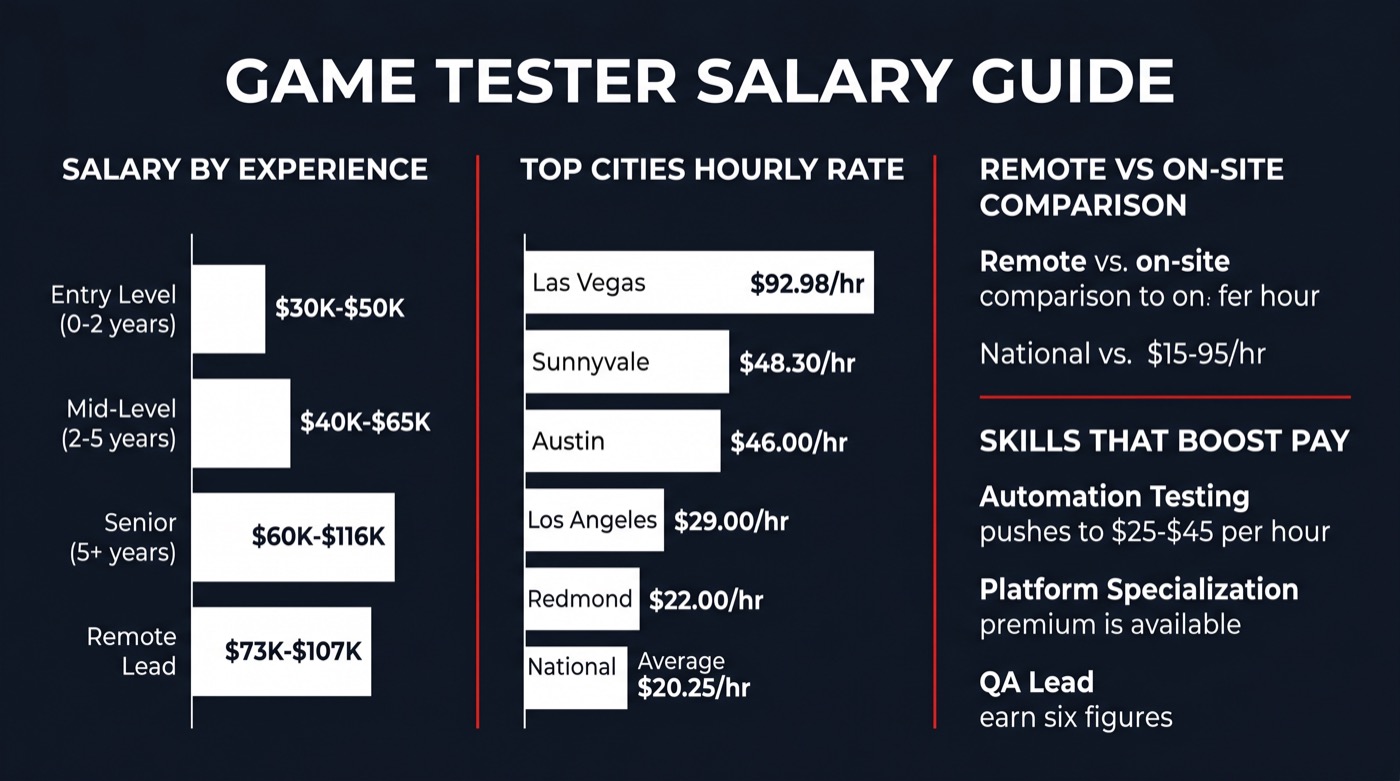
Quick Answer: In the U.S., game testers earn an average of $20.25 per hour ($42,120 per year) according to Indeed’s September 2025 data. Salaries range from roughly $30,000 at entry level to over $116,000 for senior QA roles, with wide variation based on city, experience, and specialization.
Too many job seekers still stumble across articles quoting $16,000 to $35,000 ranges from sources that have not been updated in years. That information is doing real damage to salary negotiations. This complete game tester salary guide corrects the record using the most current verified data available, including remote role premiums and skill-based pay jumps that most guides completely miss.
What Does a Game Tester Actually Earn? Salary Ranges by Experience
Experience is the single biggest driver of pay in quality assurance. A tester fresh out of school earns a very different income than someone who has spent five years hunting critical bugs on AAA titles. According to data compiled by Eneba’s gaming career hub, the career ladder breaks down clearly across three stages.
Entry-Level Game Tester Salary (0 to 2 Years)
Beginners typically earn between $30,000 and $50,000 per year, or roughly $15 to $25 per hour. With one to two years of consistent experience and some skill-building, that range can climb to $35,000 to $45,000 fairly quickly. Education plays a supporting role here: Coursera data shows a bachelor’s degree holder averages $37,000 at entry versus $28,000 for someone with only an associate degree.
Mid-Level Game Tester Salary (2 to 5 Years)
Testers with two to five years under their belts move into the $40,000 to $65,000 annual range. Techneeds, a staffing firm specializing in tech recruitment, places mid-level QA professionals at $40,000 to $60,000 on average. Developers who pick up automation testing skills during this phase push toward the upper end of that band and sometimes beyond it.
Senior Game Tester and QA Lead Salary (5+ Years)
Senior testers and QA leads command $60,000 to $116,000 per year, with CG Spectrum reporting a Glassdoor high of $116,000 for experienced QA professionals. Coursera’s experience ladder shows testers with 10 or more years averaging $74,000, while lead roles, especially remote ones, can reach $107,000 annually according to Indeed’s 2025 job postings. The path to six figures is real, but it requires specialization and leadership responsibility.
Game Tester Salary by City: Where You Work Changes Everything
Location creates some of the widest pay gaps in the entire QA field. A game tester in California or Nevada earns two to three times what someone in a lower cost-of-living state might bring home. This is not just about cost of living adjustments; it reflects the concentration of major studios and tech companies in specific metros.
| City | Average Hourly Rate | Estimated Annual (Full-Time) |
|---|---|---|
| Las Vegas, NV | $92.98 | ~$193,000 |
| Sunnyvale, CA | $48.30 | ~$100,000 |
| Austin, TX | $46.00 | ~$95,600 |
| Los Angeles, CA | $29.00 | ~$60,300 |
| Redmond, WA | $22.00 | ~$45,700 |
| National Average | $20.25 | ~$42,120 |
Source: Indeed, updated September 2025. Las Vegas figure reflects specialized contract postings and may include senior or lead-level roles.
California and Washington state tech hubs regularly post hourly rates exceeding $45, compared to the national average of around $23 reported by Techneeds. Remote work, however, is reshaping this picture dramatically. A remote QA lead position through a firm like Tifton Partners can offer $73,000 to $107,000 annually regardless of where the tester actually lives.
Remote vs. On-Site Game Testing: Which Pays More in 2026?
This is one of the most underreported shifts in the QA job market right now. Conventional wisdom assumed remote roles paid less because they removed geographic premiums. The 2025 to 2026 data tells a different story for experienced testers.
- Remote lead roles now post salaries of $73,000 to $107,000 per year, matching or exceeding many on-site positions in mid-tier cities.
- On-site contract work tends to pay higher hourly rates but comes without benefits like health insurance or paid time off, which full-time salaried roles include.
- Full-time salaried positions often include vacation accrual and stability, which Techneeds notes adds meaningful total compensation value over contract arrangements.
- Part-time remote testing at the lead level can yield six-figure equivalent income, making it an attractive option for digital artists balancing freelance work.
The trade-off is straightforward: contract work rewards you now with higher hourly pay, while full-time roles build long-term stability and benefits. For someone transitioning from a digital art career, full-time salaried QA positions offer a more predictable income floor while skills develop.
Skills That Boost Your Game Tester Salary the Most
Not all testers earn the same at the same experience level. Specific skills create measurable pay premiums that can accelerate your income without waiting years for seniority to kick in.
Automation Testing Expertise
Testers who can write and run automated test scripts command $25 to $45 or more per hour, according to Eneba’s career data. Manual testing remains valuable, but studios increasingly want QA professionals who can build repeatable automated pipelines. Learning tools like Selenium, Unity Test Framework, or even Python scripting can push your pay into a higher bracket within one to two years.
Platform and Genre Specialization
Specializing in a specific platform, such as mobile, console, or VR, or a genre like live-service games or competitive multiplayer, signals deeper expertise to hiring managers. Studios working on complex AAA titles pay more for testers who understand genre-specific edge cases and player behavior patterns. This is an area where a background in digital art or game design gives you a genuine competitive edge.
QA Leadership and Project Management
Moving from individual contributor to team lead or QA manager opens the door to $100,000 and beyond. Leadership roles involve coordinating testing schedules, writing test plans, and managing junior testers, responsibilities that justify the salary jump. Eneba’s career data confirms that leadership paths consistently push total compensation past the $100,000 mark for experienced professionals.
How to Negotiate Your Game Tester Salary: A Step-by-Step Approach
Most testers, especially those new to the field, accept the first offer without negotiating. That is a costly habit. Here is a practical process you can use before your next offer conversation.
- Research your market rate first. Use Indeed’s salary tool, Glassdoor, and Techneeds’ published ranges to establish a realistic target range for your city and experience level. Walk in knowing your number.
- Quantify your value. Document specific bugs you caught, test cases you built, or projects you shipped. Concrete contributions are more persuasive than years of experience alone.
- Anchor high, but stay reasonable. Open with the top of your target range rather than the midpoint. Negotiation almost always moves the number down, so starting higher gives you room to land where you actually want to be.
- Factor in the full package. Benefits, remote flexibility, and vacation accrual all have real monetary value. A $48,000 salary with strong benefits can outperform a $55,000 contract role with zero coverage.
- Practice your ask out loud. Salary negotiation feels uncomfortable because most people never practice it. Run through the conversation with a friend or record yourself before the real discussion.
One more thing: if you have automation skills or a specialization that the employer specifically needs, mention it directly during the negotiation. Eneba’s data shows those skills justify $25 to $45 per hour, and employers in competitive markets know that.
Is Game Testing Worth It as a Career Path for Digital Artists?
Digital artists already possess skills that transfer naturally into QA work: visual attention to detail, understanding of animation and rendering, and familiarity with how games are built from the ground up. These qualities make artists stronger testers in areas like graphical bug detection, UI consistency, and asset quality validation.
Entry pay of $30,000 to $50,000 may feel like a step sideways from freelance art income, but the structured career path in QA provides income stability that freelance work rarely does. With five or more years of experience and automation skills, senior QA roles at $60,000 to $116,000 are achievable. The path requires patience and deliberate skill-building, but the ceiling is genuine. For artists considering QA tester career paths, this transition can be particularly rewarding when combined with existing artistic expertise.
Conclusion: Key Takeaways from This Game Tester Salary Guide
After reviewing the most current data available across six authoritative sources, here is what stands out from this complete game tester salary guide:
- The national average sits at $20.25 per hour ($42,120 per year) for 2025, but experienced and specialized testers earn significantly more.
- Senior and lead QA roles range from $60,000 to $116,000, with remote lead positions reaching $107,000 annually, making six-figure game testing income a real target.
- City matters enormously: Las Vegas, Sunnyvale, and Austin all post average hourly rates well above the national figure, while remote roles are closing the geographic gap.
- Automation expertise and QA leadership skills are the fastest levers for increasing pay, often pushing hourly rates to $25 to $45 or more without waiting for years of seniority.
Whether you are just starting out or looking to level up an existing QA career, the data is clear: game testing in 2026 rewards skill, specialization, and negotiation. Stop leaving money on the table and start treating QA as the legitimate, well-paying profession it has become. For those ready to take the next step, explore the best job boards for game artists to find quality opportunities in this growing field.
Frequently Asked Questions
How much does a game tester make per hour?
According to Indeed’s September 2025 data, the national average hourly rate for game testers is $20.25, based on 53 reported salaries. Rates range from $8.26 to $49.60 per hour depending on experience, location, and employer. Senior and specialized testers in cities like Sunnyvale or Austin earn $45 to $48 per hour or more.
What is the starting salary for a game tester with no experience?
Entry-level game testers with zero to two years of experience typically earn $30,000 to $50,000 per year, or $15 to $25 per hour. Candidates with a bachelor’s degree tend to start closer to $37,000, while those with only an associate degree average around $28,000 at the entry level, according to Coursera’s career salary data.
Can game testers make six figures?
Yes. Senior game testers and QA leads with five or more years of experience can earn $60,000 to $116,000 per year. Remote lead roles are increasingly posting salaries of $73,000 to $107,000. Automation expertise and team leadership responsibilities are the primary drivers that push game tester compensation into six-figure territory.
Do game testers get paid more working remotely or on-site?
It depends on the role and experience level. On-site contract roles often pay higher hourly rates but lack benefits. Remote lead and senior positions in 2025 to 2026 post comparable or higher salaries, ranging from $73,000 to $107,000 annually. Full-time on-site positions include benefits like vacation and health coverage, which adds meaningful total compensation value.
What skills increase a game tester’s salary the most?
Automation testing is the highest-impact skill, pushing hourly rates to $25 to $45 or more. Platform specialization in areas like mobile, VR, or live-service games also commands premiums. QA leadership and project management skills open the door to senior roles exceeding $100,000 annually. Learning scripting tools and test frameworks is the fastest path to above-average pay.
Is game testing a good career for someone with a digital art background?
Yes. Digital artists bring strong visual attention to detail, understanding of asset pipelines, and familiarity with game development that makes them effective QA testers. These transferable skills are particularly valuable for graphical bug detection and UI testing. The structured career path in game testing also provides income stability that freelance art work typically does not offer. Many artists find success combining their visual expertise with technical testing skills, and Adobe Photoshop proficiency can be particularly valuable for documenting visual bugs and creating test case documentation.
How does game tester salary vary by state or city?
Location creates two to three times pay gaps across the U.S. California and Washington tech hubs average $45 or more per hour, while the national average sits at about $23. Indeed’s 2025 data highlights Las Vegas at $92.98 per hour, Sunnyvale at $48.30, and Austin at $46.00 as the top-paying cities, versus a national average of $20.25 per hour.