
Art Director Career Path: From Junior to Director
Only 1 in 5 junior designers who enter the creative industry will ever reach the art director level. That gap is not about raw talent. It is about strategy, skill-building, and knowing exactly what the next rung on the ladder looks like before you get there.
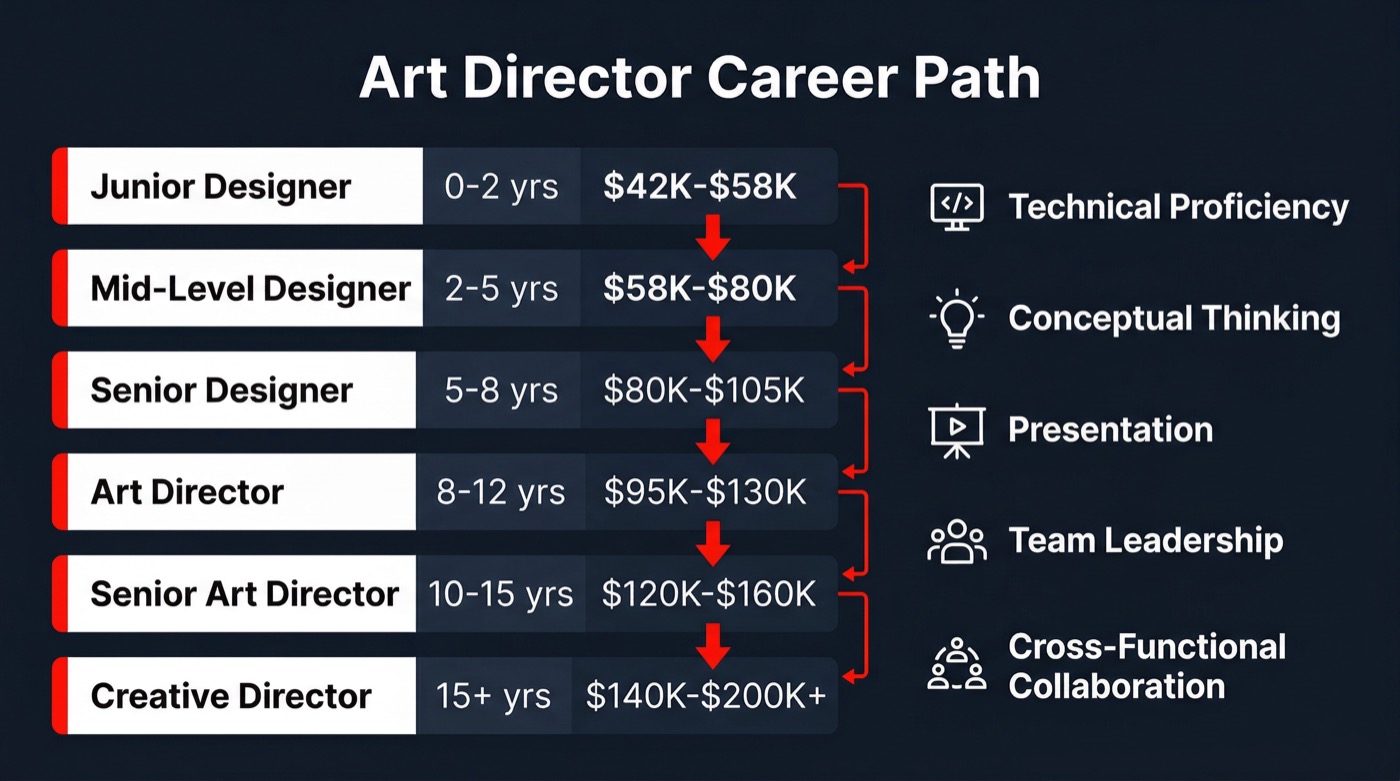
The art director career path follows a clear progression: junior designer, mid-level designer, senior designer, art director, and eventually senior art director or creative director. Each stage demands a distinct combination of technical skill, leadership ability, and business awareness. Understanding this roadmap early gives digital artists a serious competitive edge.
If you have ever wondered why some designers leap forward while others stay stuck at the same level for years, this guide answers that question. You will find a stage-by-stage breakdown, the exact skills that unlock each promotion, salary benchmarks, and a practical action plan to accelerate your ascent.
Understanding the Art Director Career Path Stage by Stage
The creative industry rarely promotes on tenure alone. Each career stage comes with a distinct set of responsibilities, expectations, and deliverables. Mapping these out helps you target the right skills at the right time.
Stage 1: Junior Designer (0 to 2 Years)
Your first role is fundamentally about execution. Junior designers translate briefs into visual concepts under the supervision of senior team members. The priority is mastering the core toolset: Adobe Photoshop, Figma, and basic typography and layout principles.
At this stage, speed and accuracy matter more than originality. Employers want to see that you can produce clean, on-brand work consistently. According to the U.S. Bureau of Labor Statistics, most art directors begin their careers in design or production roles before moving into leadership positions.
Stage 2: Mid-Level Designer (2 to 5 Years)
The mid-level phase is where ambition separates future art directors from career designers. You are expected to contribute original concepts, not just refine existing ones. You start owning smaller projects end to end, managing timelines, and presenting ideas directly to stakeholders.
This is also the stage where soft skills begin to outweigh technical skills in importance. Communication, client management, and the ability to receive and apply feedback gracefully become critical differentiators. Build a portfolio that demonstrates conceptual thinking, not just execution.
Stage 3: Senior Designer (5 to 8 Years)
Senior designers are the engine of most creative teams. You lead projects, mentor juniors, and act as the bridge between creative vision and practical production. Your work consistently influences brand direction, not just individual deliverables.
At this point, strategic thinking becomes non-negotiable. You need to understand marketing objectives, audience psychology, and how design decisions drive measurable business outcomes. Senior designers who cannot articulate the why behind their work rarely make it to art director.
Stage 4: Art Director (8 to 12 Years)
The art director role is a genuine leadership position. You set the visual direction for campaigns, products, or entire brands. You manage a team of designers, brief and evaluate creative work, and collaborate directly with copywriters, strategists, and executives.
The shift here is profound: your output is no longer individual design work. Your output is the quality and consistency of your team's creative output. Leadership, delegation, and vision become your primary tools.
Stage 5: Senior Art Director and Creative Director (12 or More Years)
Senior art directors oversee multiple campaigns or product lines simultaneously. Creative directors operate at the highest strategic level, shaping a company's entire creative philosophy and often reporting directly to the CMO or CEO. Both roles require deep business acumen alongside creative mastery.
Key Skills That Unlock Each Promotion on the Art Director Career Path
Promotions rarely happen by accident. Each transition on the art director career path is driven by a specific cluster of skills that hiring managers and creative leads actively look for.
- Technical Proficiency: Mastery of design tools (Adobe Creative Suite, Figma, Cinema 4D for motion work) is the baseline. You must execute at a high level before you can direct others to do the same.
- Conceptual Thinking: The ability to translate a business brief into a compelling visual concept separates senior-track designers from those who stay in execution roles.
- Presentation and Storytelling: Art directors pitch ideas to clients and stakeholders regularly. Designers who cannot present their work confidently hit a ceiling at the senior designer level.
- Team Leadership and Mentorship: Managing creative talent, giving constructive feedback, and maintaining team morale under deadline pressure are skills that must be developed deliberately before any director-level promotion.
- Cross-Functional Collaboration: Working effectively with marketing, product, and engineering teams is essential at the director level, where design decisions intersect with broader business strategy.
Art Director Salary Benchmarks by Career Level
Understanding compensation at each stage helps you benchmark your progress and negotiate effectively. The figures below reflect U.S. market data and vary by industry, company size, and location.
| Career Level | Years of Experience | Average Annual Salary (USD) | Primary Focus |
|---|---|---|---|
| Junior Designer | 0 to 2 years | $42,000 to $58,000 | Execution and tool mastery |
| Mid-Level Designer | 2 to 5 years | $58,000 to $80,000 | Conceptual contribution and ownership |
| Senior Designer | 5 to 8 years | $80,000 to $105,000 | Strategy, mentorship, and project leadership |
| Art Director | 8 to 12 years | $95,000 to $130,000 | Team direction and visual strategy |
| Senior Art Director | 10 to 15 years | $120,000 to $160,000 | Multi-campaign oversight and brand leadership |
| Creative Director | 15 or more years | $140,000 to $200,000+ | Full creative philosophy and executive alignment |
Browsing for open roles? See current art director jobs updated daily with salary data.
How to Advance Your Art Director Career Path: A Step-by-Step Action Plan
Knowing the stages is one thing. Building a deliberate plan to move through them is another. Follow these steps to accelerate your progression toward the art director level.
- Audit your current skill gaps honestly. Compare your current abilities against the requirements of the next stage. Identify the two or three specific skills that are holding you back, and treat them as priority projects rather than background aspirations.
- Seek out leadership opportunities before you have the title. Volunteer to mentor interns, lead smaller project teams, or take ownership of a brand style guide. Leadership experience is what differentiates senior designers from art director candidates.
- Build a concept-driven portfolio, not just an execution showcase. Include case studies that explain your creative brief, your conceptual process, the decisions you made, and the measurable results your work delivered. Art directors are evaluated on thinking, not just aesthetics. For comprehensive portfolio guidance, check out our guide on how to build a game art portfolio.
- Develop cross-functional fluency. Spend time understanding how marketing, product, and UX teams think. Attend cross-departmental meetings when possible. The more you understand adjacent disciplines, the more valuable you become at the director level.
- Cultivate a professional network in creative leadership. Seek out informational interviews with art directors and creative directors. Join industry communities like AIGA or The One Club. Mentorship from someone already at your target level compresses the learning curve significantly.
- Pursue formal feedback on your leadership style. Request regular 360-degree feedback from peers and supervisors. Understanding how others experience your communication and direction is essential self-knowledge for any aspiring creative leader.
Common Pitfalls That Stall Creative Careers
Many talented designers plateau not because of a skills deficit but because of avoidable strategic mistakes. Watch for these patterns in your own career.
Over-specializing too early is one of the most common traps. Deep expertise in a single medium (say, motion graphics or print design) can make you indispensable in one narrow lane while making you invisible for broader art director roles that require visual range. Understanding whether to be a specialist or generalist can help you navigate this decision strategically.
Neglecting communication skills creates an invisible ceiling. Designers who produce exceptional work but struggle to articulate their reasoning rarely earn the trust required for leadership. Invest in presentation training and writing skills alongside your design practice.
Finally, staying in comfort-zone environments limits your growth. Agencies, in-house studios, and startups each develop different muscles. Intentional exposure to different working environments and scales of project sharpens the adaptability that art directors need every day.
Conclusion: Your Next Move on the Art Director Career Path
The art director career path rewards intentional growth over passive progression. Here are the four key takeaways to carry forward:
- Each career stage demands a different primary skill set, and the transition from execution to leadership is the most critical shift you will make.
- Soft skills, particularly communication, mentorship, and strategic thinking, become more important than technical proficiency as you advance.
- A concept-driven portfolio and deliberate leadership experience are the two fastest ways to unlock director-level opportunities.
- Avoiding common pitfalls like over-specialization and neglecting cross-functional relationships can compress your timeline to art director by years.
Start where you are. Identify your current stage, name your next milestone, and build toward it with intention. The creative industry rewards designers who take ownership of their own trajectory. Whether you're exploring concept artist career paths or considering leadership roles, understanding these progression patterns will accelerate your professional growth.
Looking for a game art job? ArtBlast curates 10-60+ game art jobs daily. Subscribe at artblast.co/subscribe/?src=site and apply while the role is still fresh.
For more on what the daily work involves, see our guide on what art directors do.
Frequently Asked Questions
How long does it take to become an art director?
Most art directors reach that title after 8 to 12 years of professional experience. The timeline varies based on the industries you work in, the pace at which you build leadership experience, and whether you pursue mentorship or formal education along the way. Some exceptionally driven designers reach the level in 6 to 7 years by taking on leadership responsibilities early.
What degree do you need for an art director career path?
Most art directors hold a bachelor's degree in graphic design, fine arts, advertising, or a related creative field. However, a strong portfolio and demonstrable leadership experience carry more weight at senior levels than the degree itself. Many successful art directors are self-taught or come from bootcamp or certificate program backgrounds.
What is the difference between a senior designer and an art director?
A senior designer primarily produces and leads individual projects, with some mentorship responsibilities. An art director sets the visual strategy for campaigns or entire brands, manages a team of designers, and is accountable for the collective creative output of the team. The shift is from making to directing and from individual contribution to team leadership.
What skills are most important for an art director?
The most critical skills for an art director are visual strategy, team leadership, client and stakeholder communication, conceptual thinking, and cross-functional collaboration. Technical design proficiency is assumed at this level. The skills that most often separate successful art directors from those who plateau are the interpersonal and strategic competencies developed over years of deliberate practice.
Can a digital artist become an art director without agency experience?
Yes. While agency experience accelerates exposure to diverse projects and fast-paced creative leadership, in-house roles at product companies and startups offer equally valid pathways. What matters is that you accumulate experience directing creative work, managing teams, and shaping brand or campaign vision, regardless of the organizational setting in which that happens.
What industries hire art directors most frequently?
Advertising agencies, entertainment and media companies, publishing houses, fashion brands, and technology companies are the highest-volume employers of art directors. The digital transformation of marketing has made in-house art director roles at tech companies and e-commerce brands among the fastest-growing and best-compensated opportunities in the field.
How do I build a portfolio for an art director role?
Focus on case studies rather than finished work alone. Each project should include the creative brief, your conceptual approach, the key decisions you made and why, and the measurable outcomes where possible. Prioritize breadth of medium and strength of concept over visual polish. Art directors evaluate candidates on thinking process as much as final aesthetic output.