The gaming industry is experiencing a renaissance of creativity, and if you’re a talented game artist, 2026 offers unprecedented opportunities. With over 4,900 active gaming jobs on platforms like Hitmarker alone, specialized job boards have become essential hunting grounds for visual talent ranging from concept artists to technical 3D specialists.
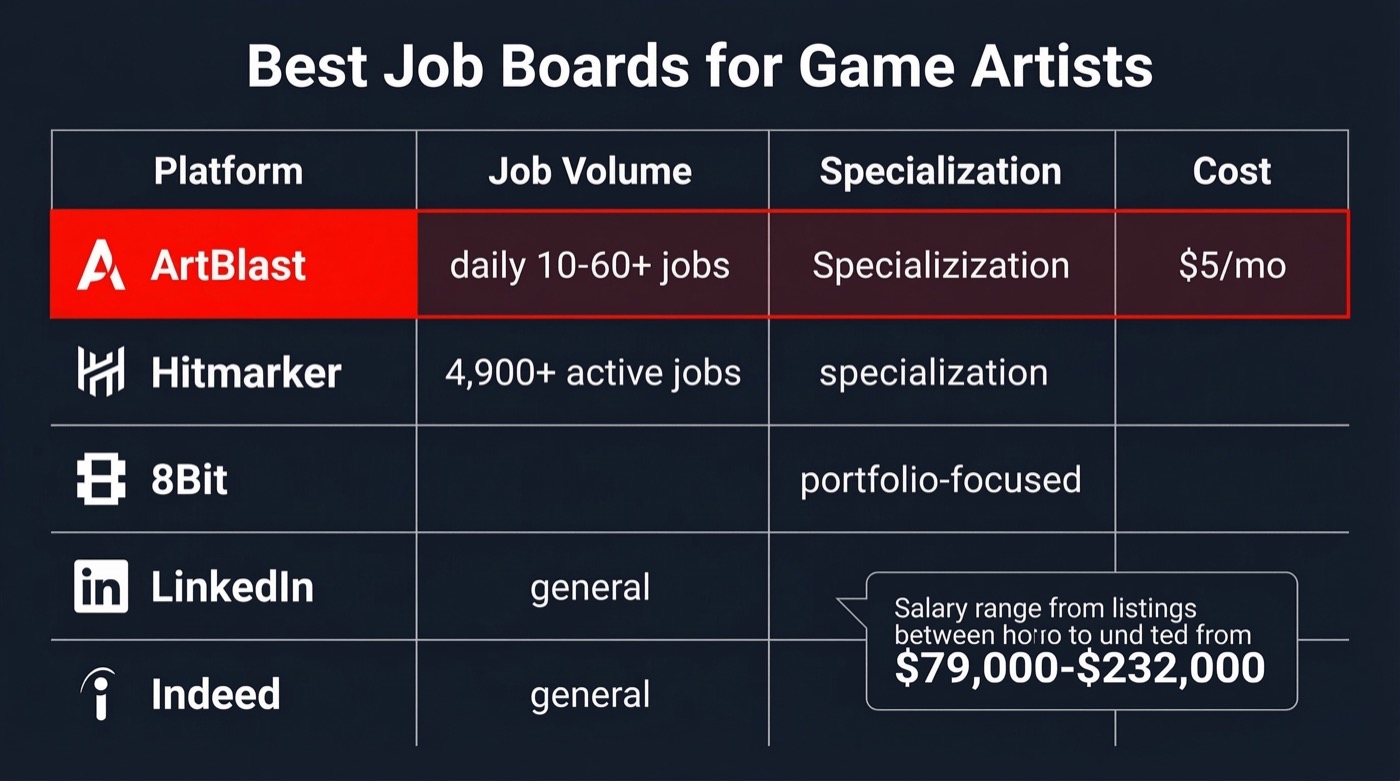
The best job boards for game artists in 2026 are portfolio-focused platforms like ArtBlast, Hitmarker, and 8Bit, which connect 2D/3D artists, animators, and concept designers directly with studios through visual showcases and industry-specific communities. These platforms outperform general job sites by offering targeted reach, remote opportunities, and specialized filters that match artistic skills with studio needs.
Whether you’re seeking a position at PlayStation, Epic Games, or an indie studio crafting the next breakout title, understanding where to look makes all the difference. According to industry recruitment experts at 8Bit, quality beats quantity when it comes to specialized creative roles. Let’s explore the platforms that will help you land your dream game art position.
Why Game Artists Need Specialized Job Boards
Generic job sites like Indeed or LinkedIn simply don’t cut it for visual roles in gaming. Game studios need to see your work, not just read about it. Specialized boards integrate portfolio viewing, understand industry terminology, and attract recruiters who specifically seek artistic talent.
The gaming industry faced significant layoffs in recent years, but 2026 marks a hiring rebound. Remote work has expanded globally, indie projects are booming, and studios require specialized skills in stylized art, motion design, and technical artistry. This perfect storm creates competition for the best positions.
Traditional job boards flood you with irrelevant listings and bury your application among hundreds of generic resumes. Artist-specific platforms cut through the noise, connecting you directly with decision-makers who value visual storytelling and technical craft.
Top Job Boards for Game Artists: Complete Comparison
Not all job boards serve the same purpose. Some excel at portfolio presentation, others at remote opportunities, and still others at indie community building. Here’s how the leading platforms stack up for game artists in 2026.
ArtBlast: #1 Art Jobs Newsletter
ArtBlast dominates as the go-to platform for visual professionals in gaming.
Studios posting here are serious about finding top-tier talent. You’ll find roles for 2D artists, 3D modelers, texture artists, concept designers, and animators across AAA studios and boutique shops alike.
The platform has both a daily newsletter and a live Discord server that will give you instant access to jobs as they land, giving artists the ability to apply quickly and be among the top applicants.
Hitmarker: Scale Meets Specialization
Hitmarker bills itself as the world’s largest gaming and esports jobs platform, and the numbers back it up. With over 4,900 active listings and roles from PlayStation, Epic Games, and Rockstar, the platform offers incredible breadth for game artists.
Recent art-specific listings include Art Producer positions at Visual Concepts, Technical Artists working in Unity, and motion designers for emerging studios. The platform also features bootcamp programs enrolling through February 2026, linking education directly to hiring pipelines.
What sets Hitmarker apart is its combination of scale and gaming focus. You’re not competing against software engineers or marketers. Every listing understands the unique demands of game development, and every recruiter speaks your language.
8Bit: Free Reach Without Compromise
8Bit operates a curated, games-only job board with a killer advantage: free postings for studios. This means you’ll find opportunities from companies of all sizes, from scrappy indies to established publishers, without the barrier of expensive listing fees filtering out smaller teams.
As a recruitment agency themselves, 8Bit understands what works in game development hiring. Their 2026 guide recommends mixing platforms based on project needs, suggesting ArtStation for portfolio-heavy roles and community boards for cultural fit.
The free model creates higher listing volume, giving you more opportunities to explore. Just be prepared to sift through more postings than you would on premium-only platforms.
Remote Game Jobs: Distance Is No Object
The shift to distributed teams has made Remote Game Jobs increasingly relevant. With postings at just $29, studios can affordably reach thousands of candidates open to remote work, and you can access opportunities worldwide without relocation.
Recent listings include Lead Stylized 3D Character Artist roles and other specialized positions that might not exist in your local market. The platform’s remote-first filtering saves time by eliminating location mismatches upfront.
For artists in regions without major studio presence, or those preferring flexible work arrangements, this platform opens doors that geography once kept closed. The 2026 surge in remote gaming positions makes this a critical resource.
Work With Indies: Community-Driven Opportunities
Indie games represent some of the most creative and innovative work in the industry. Work With Indies focuses specifically on independent studios, offering 45-day postings starting at $49 and fostering a community around indie development.
If you’re drawn to experimental art styles, narrative-driven projects, or smaller teams where your contribution shapes the entire visual identity, this platform connects you with like-minded creators. The indie space values artistic vision and versatility over specialized pipeline knowledge.
Expect tighter budgets than AAA studios but greater creative freedom and direct collaboration with developers and designers. Many successful game artists build their reputations through standout indie projects before transitioning to larger studios.
Platform Comparison: Features and Pricing
| Platform | Best For | Posting Cost | Key Feature |
|---|---|---|---|
| ArtStation | Portfolio-driven roles | $149 | Integrated portfolio viewing |
| Hitmarker | AAA and scale | Varies | 4,900+ active listings |
| 8Bit | Broad visibility | Free | Curated games-only board |
| Remote Game Jobs | Remote positions | $29 | Location-independent filtering |
| Work With Indies | Indie studios | $49 (45 days) | Community-focused indie hub |
| Games-Career.com | European market | Varies | Daily new art listings |
| InGame Job | Technical artists | Premium tiers | Specialized categories |
Additional Platforms Worth Exploring
Games-Career.com: European Focus
This dedicated games portal covers art, audio, and design roles with daily new listings. Recent postings include 2D Game Artist positions in Hamburg and other European locations, making it valuable for artists seeking opportunities in the EU market.
InGame Job: Technical Specialization
InGame Job caters to professionals seeking advanced roles like Technical Artists, Motion Designers, and specialized 3D artist positions. The platform’s premium and new job categories help you identify fresh opportunities quickly.
Grackle HQ: The Hidden Gem Finder
Grackle HQ operates as an aggregator, using scripts to track studio career pages and gather jobs from across the industry. This catches opportunities that studios post only on their own sites, revealing hidden indie and boutique studio openings.
The platform maintains a Discord feedback loop, creating community around job discovery. For thorough job searchers, aggregators like Grackle complement direct platforms by ensuring you don’t miss unlisted opportunities.
Free Community Channels: Discord and Beyond
Not every opportunity appears on formal job boards. Community spaces like Amir Satvat’s Games Community Discord provide moderated job postings with high-intent candidates and direct connections to industry professionals.
These communities require consistent engagement rather than passive scrolling. Participate in discussions, share your work for feedback, and build relationships with developers and fellow artists. Many positions get filled through community recommendations before ever reaching public boards.
The mentoring aspects of active Discord communities also accelerate your growth as an artist. You’ll learn industry standards, get portfolio critiques, and understand what studios actually seek in candidates.
How to Maximize Your Success on Game Art Job Boards
Simply creating profiles isn’t enough. Strategic use of these platforms dramatically increases your response rates and interview conversions. Follow this approach to stand out.
Step 1: Optimize Your Portfolio First
Before applying anywhere, ensure your portfolio showcases your best 10-15 pieces. Quality absolutely beats quantity. Each piece should demonstrate specific skills relevant to game development: character modeling, environment art, prop creation, texture work using tools like Substance 3D Painter, or concept design.
Include process shots showing wireframes, UV layouts, or iteration stages. Studios want to see how you think and work, not just finished renders. Tailor your portfolio to the types of roles you’re seeking.
Step 2: Create Platform-Specific Strategies
Don’t use identical approaches across all boards. On ArtStation, let your visual work lead and keep text minimal. On Hitmarker, highlight experience with specific engines or pipelines. On Work With Indies, emphasize versatility and passion for independent games.
Customize your profile and applications to each platform’s culture and audience. This targeted approach yields better matches and higher response rates than generic mass applications.
Step 3: Mix Paid and Free Channels
Industry experts recommend combining 1-2 paid boards (like ArtStation plus Hitmarker) with free options (8Bit and Discord communities) for optimal reach. Paid platforms often feature more established studios with better resources, while free boards capture scrappy startups and indie teams.
This mix ensures you see the full spectrum of opportunities without limiting yourself to either premium-only or free-only listings. Different studios use different channels based on their hiring budgets and recruitment strategies.
Step 4: Engage Consistently in Communities
Community boards like Work With Indies and Discord channels reward active participation. Post your work regularly, comment thoughtfully on others’ projects, and contribute to discussions about industry trends and techniques.
This visibility keeps you top-of-mind when opportunities arise. Many indie developers prefer hiring artists they’ve interacted with over cold applications from strangers. Relationship building accelerates your job search.
Step 5: Track and Refine Your Approach
Monitor which platforms generate interviews and offers. If ArtStation yields consistent responses but Remote Game Jobs doesn’t, focus your energy accordingly. Your specific skills, style, and target roles will perform differently across platforms.
Continuously update your portfolio based on feedback and industry trends. What worked six months ago may not resonate today as art styles and technical requirements evolve.
Understanding Salary Expectations and Market Rates
Game artist salaries vary dramatically based on specialization, experience, and studio size. General job sites like ZipRecruiter show game artist positions ranging from $79,000 to $232,000 annually, reflecting this diversity.
Entry-level 2D artists and junior 3D modelers typically start toward the lower end, while senior technical artists, art directors, and specialized roles command premium rates. Remote positions may offer geographic arbitrage opportunities, with competitive salaries regardless of your location.
Indie studios often can’t match AAA salaries but may offer equity, creative control, or flexible arrangements. Evaluate total compensation including benefits, work-life balance, and portfolio-building potential beyond base pay. For more detailed compensation insights, explore our comprehensive game artist salary guide.
Current Trends Shaping Game Art Hiring in 2026
Several forces are reshaping how studios hire and where artists find opportunities. Understanding these trends helps you position yourself strategically.
Remote-First Becomes Standard
Distributed teams are no longer experimental. Major studios now hire globally, and entire projects get developed without centralized offices. This expands your potential employer list dramatically but also increases competition as you’re no longer competing just locally.
Stylized Art Demand Surges
While photorealistic AAA titles continue, stylized and artistic games are experiencing a renaissance. Roles like Lead Stylized 3D Character Artist appear frequently on platforms like Remote Game Jobs, reflecting player appetite for visually distinctive experiences.
Technical Artists Bridge Art and Engineering
The line between artist and technical specialist blurs as real-time rendering, procedural generation, and advanced shaders become standard. Technical Artist positions on platforms like InGame Job reflect studios seeking hybrid talents who can optimize art pipelines and solve complex visual challenges.
Bootcamps Connect Education to Employment
Platforms like Hitmarker now offer bootcamp programs alongside job listings, creating direct pipelines from education to employment. These programs address skill gaps and provide structured paths for aspiring artists to become hire-ready.
Avoiding Common Pitfalls When Using Job Boards
Even the best platforms won’t help if you make these frequent mistakes. Here’s what to avoid.
- Applying to everything: Quality applications to well-matched roles outperform spray-and-pray approaches. Studios can tell when you’ve sent generic applications versus thoughtful, targeted ones.
- Neglecting your portfolio: Your portfolio matters infinitely more than your resume for art roles. An outdated or weak portfolio tanks your chances regardless of experience.
- Ignoring free options: Paid platforms aren’t inherently better. Free boards like 8Bit and community Discord channels connect you with serious opportunities from studios of all sizes.
- Forgetting to follow up: Polite follow-ups after 1-2 weeks demonstrate genuine interest and keep your application visible. Many positions get filled through persistent, professional communication.
- Overlooking smaller studios: Indie and boutique studios offer invaluable experience, creative freedom, and relationship-building opportunities that can launch your career more effectively than junior roles at massive corporations.
Key Takeaways: Finding Your Next Game Art Role
The best job boards for game artists in 2026 combine portfolio integration, industry specialization, and community engagement to connect visual talent with studios seeking specific skills. Success requires strategic platform selection and consistent optimization.
Start with portfolio-first platforms like ArtStation for visual impact, complement with scale players like Hitmarker for breadth, and engage free community channels for relationships and hidden opportunities. Mix remote-focused boards if location flexibility matters to you.
Remember that platforms are tools, not magic solutions. Your portfolio quality, application thoughtfulness, and community participation determine outcomes more than any single job board. Invest time in your craft, showcase your best work, and engage authentically with the game development community.
The gaming industry needs talented artists to bring virtual worlds to life. With the right platforms and strategic approach, 2026 offers remarkable opportunities for game artists at every career stage.
Frequently Asked Questions
What are the best job boards for game artists in 2026?
The top platforms include ArtStation for portfolio-driven applications, Hitmarker for scale and AAA studios, 8Bit for free curated listings, Remote Game Jobs for distributed positions, and Work With Indies for independent studio opportunities. Each serves different needs, so using multiple platforms strategically yields the best results.
How much do game artist job board postings cost for studios?
Pricing varies significantly across platforms. ArtStation charges $149 per posting, Remote Game Jobs costs $29, Work With Indies offers 45-day listings at $49, and 8Bit provides free postings. Studios typically mix paid premium boards with free options to balance reach and budget.
Should game artists use general job sites or specialized boards?
Specialized boards dramatically outperform general sites for game art roles. Platforms like ArtStation and Hitmarker integrate portfolio viewing, use industry-specific terminology, and attract recruiters specifically seeking visual talent. General sites bury your application among irrelevant candidates and lack visual showcase capabilities that artists need.
How important is portfolio quality when applying through game art job boards?
Portfolio quality matters more than any other factor for game artist positions. Studios evaluate your visual work before considering experience or education. Showcase 10-15 of your absolute best pieces with process shots, tailor content to target roles, and update regularly based on industry trends and feedback.
Can game artists find remote work through these job boards?
Absolutely. Remote Game Jobs specializes in distributed positions, and most major platforms now feature substantial remote opportunities. The 2026 shift to remote-first hiring means game artists can access global opportunities regardless of location, though competition increases as geographic barriers disappear.
What’s the difference between paid and free game art job boards?
Paid boards like ArtStation often feature established studios with larger budgets and more resources, while free boards like 8Bit attract studios of all sizes including scrappy startups. Neither is inherently better. Mix both types to see the full opportunity spectrum and maximize your chances.
How do Discord communities compare to formal job boards for game artists?
Discord communities like Amir Satvat’s Games Community offer moderated postings, direct industry connections, and mentoring opportunities that formal boards lack. They require active engagement rather than passive applications but build relationships that often lead to opportunities before they reach public boards. Use communities alongside formal platforms for comprehensive coverage.