Are you considering a career as an environment artist, or wondering if your current compensation matches industry standards? The gaming and entertainment industries are booming, and environment artists are more in demand than ever before.
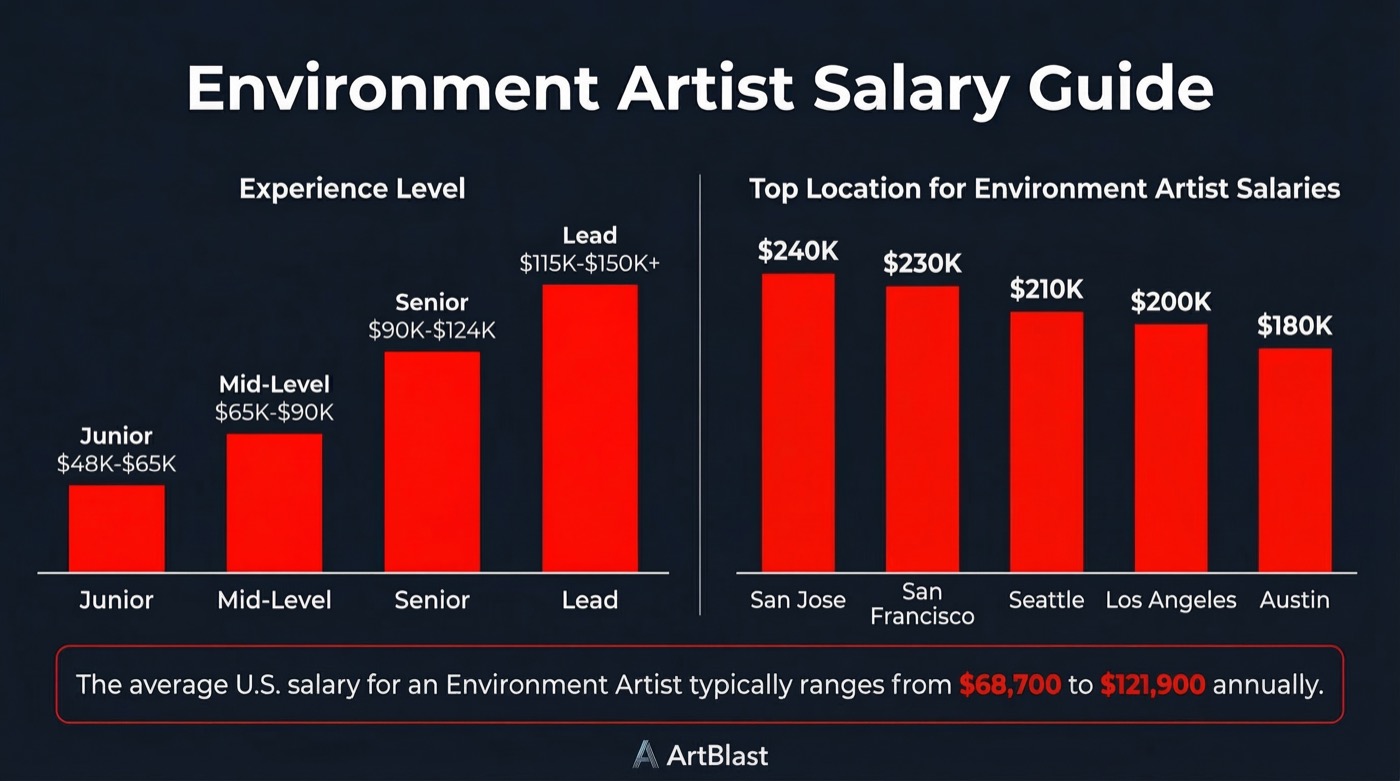
Environment artists in the United States earn between $49,000 and $124,000 annually, with the average salary ranging from $68,700 to $121,900 depending on experience, location, and studio size. Browse current environment artist jobs or read on for a full salary breakdown. Your earning potential as an environment artist depends significantly on where you work and your skill specialization.
This comprehensive Environment Artist Salary Guide breaks down everything you need to know about compensation in this exciting field. Whether you are just starting out or looking to negotiate your next raise, understanding the salary landscape helps you make informed career decisions.
Understanding Environment Artist Compensation in 2024
Environment artists create the immersive worlds that bring video games, films, and virtual experiences to life. As the demand for high-quality digital content continues to surge, so does the value placed on skilled environment artists.
The average hourly wage for environment artists sits at approximately $27.50 per hour. However, this figure varies dramatically based on several key factors that we will explore throughout this guide.
Entry-level positions typically start around $49,000 annually, while experienced senior environment artists can command salaries exceeding $124,000. The wide range reflects the diverse nature of the industry and the premium placed on specialized skills.
Geographic Impact on Environment Artist Salaries
Location plays a crucial role in determining your earning potential as an environment artist. Major tech hubs and entertainment centers offer significantly higher compensation packages than smaller markets.
San Jose, California leads the nation with average total compensation reaching $240,677 for environment artists. This Silicon Valley hotspot offers nearly double the national average, reflecting both the high cost of living and the concentration of major gaming and tech companies.
Other high-paying markets include Los Angeles, Seattle, San Francisco, and Austin. These cities host major game studios, film production companies, and tech giants that compete aggressively for top talent.
Regional Salary Variations
Understanding regional differences helps you make strategic career decisions. Here are the key patterns:
- West Coast: Highest salaries due to major studios and tech companies, but also highest living costs
- East Coast: Competitive salaries in cities like Boston and New York, strong film and gaming presence
- Midwest and South: Lower salaries but significantly reduced cost of living, growing remote opportunities
- Remote Positions: Increasingly common, often offering coastal salaries with geographic flexibility
Environment Artist Salary Guide: Experience Level Breakdown
Your experience level dramatically impacts your earning potential. The industry rewards skill development and proven track records with substantial salary increases.
| Experience Level | Salary Range | Typical Responsibilities |
|---|---|---|
| Junior (0-2 years) | $49,000 – $65,000 | Asset creation, texturing, prop modeling under supervision |
| Mid-Level (3-5 years) | $65,000 – $90,000 | Full environment creation, lighting, optimization, mentoring juniors |
| Senior (6-10 years) | $90,000 – $124,000 | Complex world building, technical leadership, pipeline development |
| Lead/Principal (10+ years) | $115,000 – $150,000+ | Team management, artistic direction, cross-department collaboration |
Industry Sectors and Their Salary Differences
Not all environment artist positions offer the same compensation. The industry sector you choose significantly affects your earning potential and career trajectory.
Video game studios typically offer the most competitive salaries, especially AAA developers with major franchises. Companies like Activision Blizzard, Epic Games, and Riot Games are known for premium compensation packages.
Film and animation studios provide strong mid-range salaries with excellent benefits. Studios working on blockbuster films and streaming content invest heavily in environment talent to create photorealistic worlds.
Emerging Opportunities
Virtual reality and augmented reality companies are rapidly expanding their environment art teams. These cutting-edge sectors often offer competitive salaries to attract talent comfortable with emerging technologies.
Architectural visualization firms hire environment artists for real estate and design projects. While salaries may be slightly lower than gaming, these positions often provide excellent work-life balance and consistent project flow.
How to Maximize Your Environment Artist Salary
Strategic career planning helps you reach the higher end of the salary spectrum. Follow these proven steps to increase your earning potential:
Step 1: Build a Specialized Skill Set
Focus on mastering industry-standard software including Unreal Engine, Unity, Maya, and Substance Designer. Specialization in highly technical areas like procedural generation or real-time rendering commands premium rates.
Develop proficiency in next-generation techniques like photogrammetry, advanced PBR workflows, and performance optimization. Studios pay more for artists who can create stunning visuals while maintaining performance targets.
Step 2: Create a Outstanding Portfolio
Your portfolio is your most powerful salary negotiation tool. Showcase complete, polished environments rather than isolated assets to demonstrate your ability to deliver finished products. Learn more about how to build a game art portfolio that showcases your environment art skills effectively.
Include variety in your portfolio: natural landscapes, urban settings, stylized worlds, and photorealistic scenes. This versatility makes you valuable to a wider range of employers and projects.
Step 3: Network Within the Industry
Attend industry conferences like GDC, SIGGRAPH, and regional game development meetups. Many high-paying positions are filled through professional networks before they are publicly advertised.
Engage actively on platforms like ArtStation, Twitter, and LinkedIn. Share your work, comment on others’ projects, and build relationships with recruiters and studio leads.
Step 4: Consider Strategic Career Moves
Be willing to relocate to high-paying markets early in your career. The experience gained at major studios accelerates skill development and opens doors to future opportunities, including lucrative remote positions.
Negotiate aggressively when changing employers. Job transitions typically offer the best opportunities for significant salary increases, often 15-30% higher than your previous position.
Benefits and Total Compensation Packages
Base salary tells only part of the compensation story. Total compensation packages for environment artists often include valuable additional benefits that significantly increase your real earnings.
Major studios frequently offer annual bonuses ranging from 10-20% of base salary. These performance-based incentives reward successful project completions and can substantially boost your annual income.
Stock options or equity grants are common at publicly traded game companies and tech firms. These can become extremely valuable, particularly at rapidly growing companies in the gaming and entertainment sectors.
Additional Perks to Consider
- Comprehensive health insurance with low or no employee premiums
- 401(k) matching programs, typically 3-6% of salary
- Professional development budgets for courses, conferences, and software
- Flexible work arrangements including remote options and flexible hours
- Generous paid time off, often 15-25 days annually plus holidays
Future Outlook for Environment Artist Careers
The demand for skilled environment artists continues to grow as entertainment consumption shifts increasingly toward interactive digital experiences. This trend suggests continued upward pressure on salaries throughout the coming decade.
The metaverse and Web3 initiatives are creating entirely new employment opportunities. Companies building virtual worlds need experienced environment artists, and these emerging sectors often offer competitive compensation to attract proven talent.
Remote work normalization benefits environment artists significantly. You can now access high-paying positions from major studios while living in lower-cost areas, effectively increasing your real purchasing power and quality of life.
Key Takeaways from This Environment Artist Salary Guide
Environment artist salaries range from $49,000 to $124,000 annually, with averages between $68,700 and $121,900 depending on multiple factors. Location remains the single biggest determinant of compensation, with San Jose leading at average total compensation of $240,677.
Your earning potential increases dramatically with experience and specialization. Strategic skill development, portfolio quality, and willingness to relocate or negotiate aggressively during job transitions significantly impact your career earnings. Consider exploring our environment artist career path guide for detailed steps to advance your career.
The future looks bright for environment artists as demand continues to outpace supply. Emerging technologies like VR, AR, and metaverse platforms are creating new high-paying opportunities for skilled professionals.
Total compensation extends beyond base salary. Consider bonuses, equity, benefits, and work-life balance when evaluating opportunities, as these factors substantially affect your real quality of life and long-term wealth accumulation. For broader salary insights, check out our comprehensive game artist salary guide covering all specializations.
Want to compare salaries across roles and countries? Use the free Artist Salary Calculator to look up pay ranges by role, seniority, and location.
Looking for environment artist jobs? ArtBlast curates 10-60+ game art jobs daily including environment artist roles. Subscribe at artblast.co/subscribe and apply while the role is still fresh.
Frequently Asked Questions
What is the average starting salary for an entry-level environment artist?
Entry-level environment artists typically earn between $49,000 and $65,000 annually, depending on location and studio size. Major tech hubs like San Francisco and Los Angeles offer higher starting salaries, often $55,000 to $70,000, while smaller markets or remote positions may start closer to $45,000. Your portfolio quality and educational background significantly influence starting offers, with graduates from prestigious programs often commanding premium entry-level salaries.
How does freelance environment artist income compare to full-time employment?
Freelance environment artists can potentially earn more per hour, typically $50 to $150 per hour depending on expertise and client base. However, freelancers must account for inconsistent work flow, lack of benefits, self-employment taxes, and business expenses. Successful freelancers with established client relationships often earn $80,000 to $120,000 annually, matching or exceeding full-time salaries while enjoying schedule flexibility. Building a sustainable freelance career typically requires 3-5 years of industry experience first.
Which software skills command the highest environment artist salaries?
Proficiency in Unreal Engine 5 currently commands premium salaries as studios adopt next-generation real-time rendering. Advanced skills in procedural generation tools like Houdini, technical art capabilities including shader development, and optimization expertise for performance-critical applications significantly increase earning potential. Environment artists who combine artistic excellence with technical programming knowledge, such as Blueprint or C++ experience, often earn 20-30% more than artists with traditional skillsets alone.
Do environment artists in the film industry earn more than game industry artists?
Salaries are generally comparable between film and gaming, with the gaming industry slightly edging ahead at major AAA studios. Film industry environment artists typically earn $65,000 to $110,000, while gaming professionals earn $69,000 to $124,000. However, film projects often offer more predictable schedules and fewer crunch periods. The highest salaries exist in gaming at companies like Epic Games, Riot, and major publishers, but prestigious film studios like ILM and Weta Digital also offer premium compensation packages.
How much can senior environment artists earn at top gaming companies?
Senior environment artists at top-tier gaming companies like Riot Games, Blizzard, and Epic Games typically earn $110,000 to $150,000 in base salary, with total compensation reaching $150,000 to $220,000 when including bonuses and equity. Lead and principal positions can exceed $180,000 in base salary with total packages surpassing $250,000 at major tech companies with gaming divisions. Geographic location significantly impacts these figures, with Silicon Valley and Seattle positions commanding the highest premiums.
What certifications or education increase environment artist salaries?
While formal certifications matter less than portfolio quality, degrees from prestigious programs like Gnomon School, SCAD, or Ringling College can provide 10-15% higher starting salaries. Specialized training in emerging technologies like real-time ray tracing, virtual production, or metaverse development demonstrates commitment to cutting-edge skills. However, a strong portfolio showcasing professional-quality work remains more valuable than any degree. Many successful environment artists are self-taught, with earnings determined primarily by demonstrable skill rather than educational credentials.
How often do environment artist salaries typically increase?
Environment artists at established studios typically receive annual raises of 3-5% for cost-of-living adjustments and satisfactory performance. Promotions to mid-level or senior positions provide larger increases of 15-25%. The most significant salary jumps occur when changing employers, often resulting in 20-40% increases, which is why many artists strategically change studios every 2-4 years during their career growth phase. Performance bonuses tied to successful game launches or project completions can add 10-20% to annual income in exceptional years.