The visual effects industry is booming, and talented VFX artists are commanding impressive salaries that reflect their specialized skills. If you’re considering a career in visual effects or looking to negotiate better compensation, understanding the current salary landscape is crucial for your success.
Whether you’re just starting out or have years of experience under your belt, the earning potential for VFX artists varies significantly based on location, expertise, and specialization. This comprehensive guide breaks down everything you need to know about VFX artist compensation .
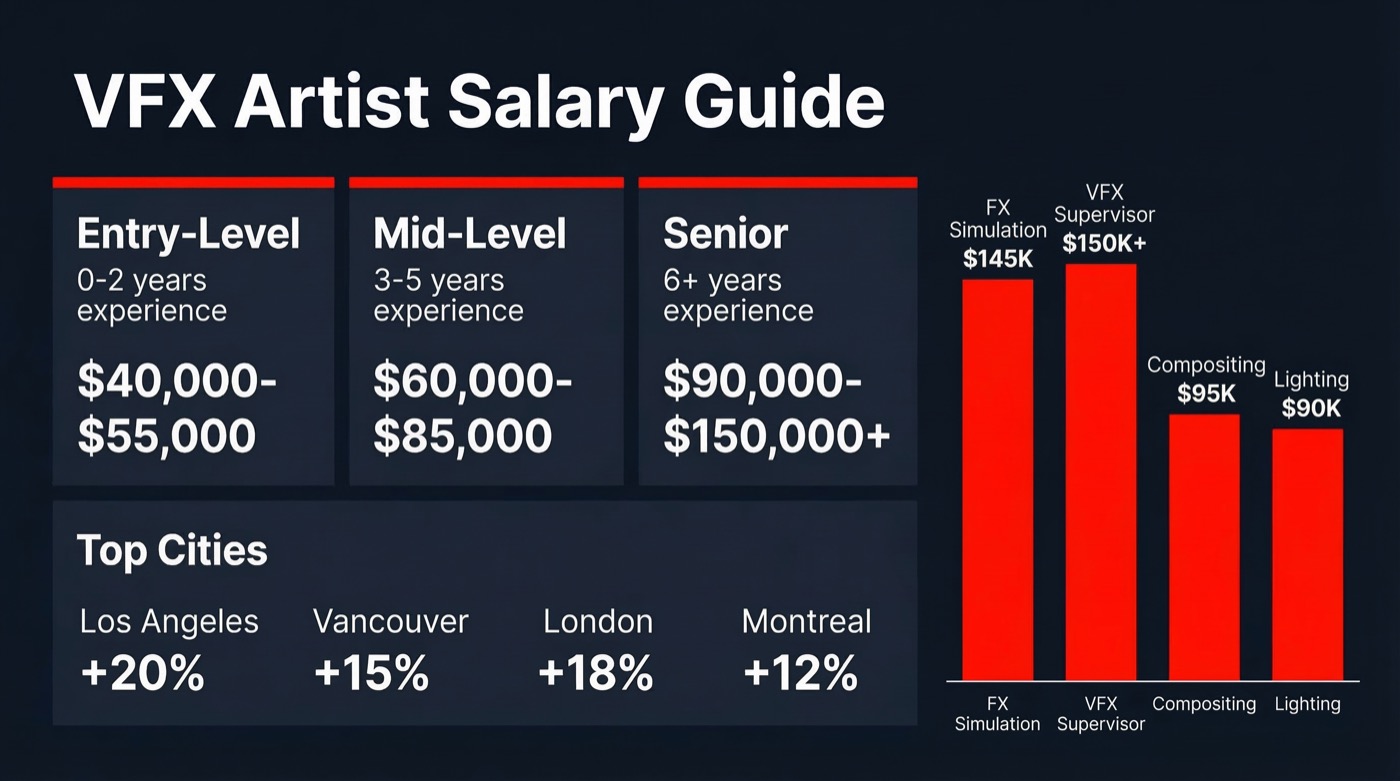
The average VFX artist salary ranges from $55,000 to $95,000 annually for mid-level professionals, with entry-level positions starting around $45,000 and senior artists earning $110,000 to $150,000 or more. Specialized roles in major entertainment hubs can command even higher compensation packages.
Understanding the VFX Artist Salary Landscape
The visual effects industry has experienced tremendous growth over the past decade. As streaming platforms expand their content libraries and theatrical releases demand increasingly sophisticated effects, the demand for skilled VFX artists continues to rise.
Compensation in this field isn’t one-size-fits-all. Your earnings depend on multiple factors including your technical skills, software proficiency, portfolio quality, and ability to work within tight production deadlines.
Geographic location plays a significant role too. Cities like Los Angeles, Vancouver, London, and Montreal offer higher salaries but also come with increased living costs that you need to factor into your career decisions. Browse current VFX artist job listings to see where studios are actively hiring.
VFX Artist Salary by Experience Level
Your experience level dramatically impacts your earning potential in the visual effects industry. Understanding these benchmarks helps you set realistic expectations and negotiate effectively.
Entry-Level VFX Artists (0-2 Years)
Breaking into the VFX industry requires dedication and a strong portfolio. Entry-level artists typically earn between $40,000 and $55,000 annually.
At this stage, you’re building your skills and learning production pipelines. Many artists start as junior compositors, rotoscoping artists, or render wranglers before specializing in specific disciplines.
Mid-Level VFX Artists (3-5 Years)
With a few years of professional experience, your value increases substantially. Mid-level VFX artists earn between $60,000 and $85,000 on average.
You’re now trusted with more complex shots and may begin mentoring junior team members. Specialization in areas like FX simulation, lighting, or creature animation can push your salary toward the higher end of this range.
Senior VFX Artists (6+ Years)
Senior artists with proven track records command premium salaries ranging from $90,000 to $150,000 or more. Lead artists and VFX supervisors can exceed $180,000 annually.
At this level, you’re solving complex technical challenges, making creative decisions, and often managing teams. Your expertise directly impacts project quality and production efficiency.
Salary Comparison by VFX Specialization
| Specialization | Entry-Level | Mid-Level | Senior-Level |
|---|---|---|---|
| Compositor | $45,000 – $55,000 | $65,000 – $85,000 | $95,000 – $130,000 |
| 3D Modeler | $42,000 – $52,000 | $60,000 – $80,000 | $90,000 – $125,000 |
| FX Artist (Simulations) | $50,000 – $60,000 | $70,000 – $90,000 | $100,000 – $145,000 |
| Lighting Artist | $46,000 – $56,000 | $65,000 – $85,000 | $95,000 – $135,000 |
| Character Animator | $49,000 – $59,000 | $69,000 – $89,000 | $99,000 – $140,000 |
Key Factors That Influence VFX Artist Earnings
Multiple variables determine your compensation as a VFX artist. Understanding these factors helps you strategically advance your career and maximize your earning potential.
Technical Skills and Software Proficiency
Mastery of industry-standard software significantly impacts your salary. Proficiency in tools like Houdini, Nuke, Maya, and Unreal Engine makes you more valuable to studios.
Artists who can work across multiple software packages or have specialized technical skills in areas like procedural generation or real-time rendering often command premium rates. Continuous learning is essential in this rapidly evolving field.
Studio Size and Project Type
Major studios working on blockbuster films and high-budget streaming series typically offer higher salaries than smaller boutique studios. However, smaller studios may provide more creative freedom and diverse project exposure.
Commercial work, gaming, and emerging fields like virtual production also offer competitive compensation with different work-life balance considerations. Each sector has unique advantages worth evaluating.
Geographic Location
Location remains one of the most significant salary determinants. Major VFX hubs offer higher base salaries but require careful cost-of-living analysis.
- Los Angeles: Average salaries 15-25% above national average, but housing costs are substantially higher
- Vancouver: Competitive salaries with tax incentives attracting major productions
- London: Strong market with diverse opportunities across film and advertising
- Montreal: Growing hub with favorable tax credits and lower cost of living
- Remote positions: Increasingly common, often offering geographic flexibility with competitive pay
How to Maximize Your VFX Artist Salary
Strategic career moves and skill development can significantly increase your earning potential. Here’s a practical roadmap to boost your compensation over time.
Step 1: Build a Specialized Skill Set
Rather than being a generalist, develop deep expertise in high-demand specializations. FX artists specializing in complex simulations, for example, are consistently in high demand.
Focus on technical areas where supply doesn’t meet demand. Real-time VFX for virtual production and LED volumes represents a growing opportunity area with limited talent pools.
Step 2: Create a Portfolio That Commands Attention
Your portfolio is your most powerful negotiation tool. Quality trumps quantity every time.
Include breakdowns that demonstrate problem-solving abilities and technical knowledge. Showing before-and-after comparisons and explaining your creative decisions helps potential employers understand your value.
Step 3: Network Within the Industry
Many high-paying positions never reach job boards. Building relationships with other artists, supervisors, and recruiters opens doors to opportunities with better compensation.
Attend industry events, participate in online communities, and maintain professional relationships with colleagues. Your network often determines your access to premium opportunities.
Step 4: Negotiate Effectively
Research industry salary standards before entering negotiations. Know your worth based on your skills, experience, and market conditions.
Consider the complete compensation package including benefits, overtime policies, profit-sharing, and professional development opportunities. Total compensation matters more than base salary alone.
Step 5: Stay Current With Emerging Technologies
The VFX industry evolves rapidly. Artists who embrace new technologies like machine learning-assisted workflows, virtual production techniques, and real-time rendering maintain competitive advantages.
Invest time in continuous education through online courses, workshops, and experimentation with new tools. Staying ahead of industry trends protects your career against obsolescence.
Freelance vs. Staff VFX Artist Compensation
The choice between freelance and staff positions significantly impacts your financial situation. Each path offers distinct advantages depending on your career goals and lifestyle preferences.
Staff Position Benefits
Full-time employment provides stability with consistent paychecks, health insurance, retirement benefits, and paid time off. Staff positions typically include professional development support and clear advancement paths.
You’ll gain deep knowledge of specific pipelines and build stronger relationships within established teams. This stability appeals to artists prioritizing work-life balance and financial predictability.
Freelance Advantages
Freelance artists often command higher hourly or daily rates, potentially earning 20-40% more than equivalent staff positions. You gain project diversity and schedule flexibility that appeals to many experienced professionals.
However, you’re responsible for your own benefits, equipment, and handling irregular income streams. Successful freelancers maintain financial discipline and build substantial client networks. Building a strong portfolio is essential whether you’re pursuing freelance work or seeking staff positions.
- Calculate your true hourly rate: Factor in unbilled time for administrative work, client acquisition, and downtime between projects
- Build an emergency fund: Maintain 3-6 months of expenses to weather slow periods without financial stress
- Diversify your client base: Avoid depending on a single client for more than 40% of your income
- Invest in professional development: Allocate 10-15% of earnings toward skill development and tool upgrades
Industry Trends Affecting VFX Artist Salaries
Several market forces are reshaping compensation in the visual effects industry. Understanding these trends helps you position yourself strategically for long-term career success.
Remote Work Normalization
The shift toward remote and hybrid work arrangements has expanded opportunities for artists in lower cost-of-living areas. Studios increasingly hire talent regardless of location, creating a more competitive global market.
This trend can level geographic salary disparities while allowing you to optimize your income-to-cost-of-living ratio. Remote opportunities require strong self-management skills and reliable home studio setups.
Streaming Platform Demand
Major streaming services continue investing heavily in original content with cinematic-quality VFX. This sustained demand supports salary growth, particularly for artists who can deliver film-quality work on television production schedules.
The volume of projects has created consistent employment opportunities, though budget pressures sometimes limit per-project compensation compared to theatrical releases.
Real-Time Technology Adoption
Virtual production using LED volumes and real-time engines is revolutionizing VFX workflows. Artists with Unreal Engine or Unity expertise are seeing significant demand and corresponding salary premiums.
This technological shift creates opportunities for traditional VFX artists to transition into higher-paying technical artist roles. Early adopters of these skills position themselves advantageously.
Conclusion
The VFX artist salary guide for reveals a healthy and growing industry with substantial earning potential for skilled professionals. Your compensation trajectory depends on strategic skill development, specialization choices, and understanding market dynamics.
Entry-level artists can expect starting salaries around $45,000, with clear paths to six-figure incomes as you gain experience and expertise. Specialization in high-demand areas like FX simulation or real-time rendering can accelerate this progression significantly. If you’re looking to break into the field, consider reading our guide on 3D artist salary expectations to understand related career opportunities.
Geographic considerations, freelance versus staff decisions, and continuous skill development all play crucial roles in maximizing your VFX artist salary over your career. The industry rewards those who stay current with emerging technologies while building strong professional networks.
Whether you’re just entering the field or looking to advance your career, understanding these compensation benchmarks empowers you to make informed decisions and negotiate effectively for the salary you deserve. For those interested in creative applications, tools like Adobe Photoshop remain essential for concept work and compositing tasks throughout your VFX career.
Want to compare salaries across roles and countries? Use the free Artist Salary Calculator to look up pay ranges by role, seniority, and location.
Looking for a VFX artist job? ArtBlast curates 10-60+ game art and VFX jobs daily. Subscribe at artblast.co/subscribe and apply while the role is still fresh.
Frequently Asked Questions
What is the starting salary for a VFX artist with no experience?
Entry-level VFX artists typically start between $40,000 and $55,000 annually, depending on location and studio size. Junior positions like rotoscoping artist or render wrangler often fall at the lower end of this range. Building a strong portfolio and demonstrating proficiency in industry-standard software helps you secure positions toward the higher end. Many studios also offer internships that can lead to full-time positions with competitive starting salaries.
How much do senior VFX artists make at major studios?
Senior VFX artists at major studios typically earn between $90,000 and $150,000 annually, with lead artists and supervisors exceeding $180,000. Compensation varies based on specialization, with FX artists specializing in complex simulations often commanding premium rates. Major studios in Los Angeles, Vancouver, and London typically offer the highest salaries, though remote positions are increasingly competitive. Total compensation packages including bonuses, profit-sharing, and benefits can add 15-25% to base salary figures.
Is freelance VFX work more profitable than full-time employment?
Freelance VFX artists often earn 20-40% higher hourly rates than staff positions, but profitability depends on consistent project flow and self-management. You must account for self-employment taxes, health insurance, equipment costs, and unbilled administrative time. Successful freelancers can earn more annually, but face income variability and lack traditional benefits. The optimal choice depends on your financial discipline, network strength, and preference for stability versus flexibility and potentially higher earnings.
Which VFX specialization pays the highest salary?
FX artists specializing in complex simulations (destruction, fluids, crowds) typically command the highest salaries, often earning $100,000 to $145,000 at senior levels. VFX supervisors and technical directors also earn premium compensation, frequently exceeding $150,000. Real-time VFX artists with Unreal Engine expertise for virtual production are seeing increased demand and competitive salaries. Character animation and compositing offer strong earning potential as well, with senior artists regularly exceeding six figures.
How does location affect VFX artist salary?
Location significantly impacts VFX artist earnings, with major hubs like Los Angeles offering salaries 15-25% above national averages. Vancouver, London, and Montreal provide competitive compensation with varying cost-of-living considerations. However, remote work opportunities are reducing geographic disparities, allowing artists in lower-cost areas to access higher-paying positions. When evaluating location-based salary differences, calculate the real value by factoring housing costs, taxes, and quality of life considerations beyond base compensation.
What skills increase VFX artist salary the most?
Advanced proficiency in Houdini for procedural effects and simulations consistently commands salary premiums of 15-30%. Real-time engine expertise (Unreal Engine, Unity) for virtual production is increasingly valuable as studios adopt LED volume workflows. Strong Python or other scripting abilities for pipeline development add significant value. Specialized skills in photorealistic rendering, complex character work, or technical direction separate you from generalists and justify higher compensation throughout your career.
How often do VFX artists receive salary increases?
Staff VFX artists typically receive annual performance reviews with salary increases of 3-8% for solid performance, and 10-15% for exceptional contributions. Significant increases often come through promotions or studio changes rather than annual raises. Freelancers adjust rates more frequently, often increasing rates 5-10% annually as experience grows. The fastest salary growth occurs in your first five to seven years as you transition from junior to mid-level and eventually senior positions.
Related Articles
See the full guide: VFX Artist Career Path.