Imagine discovering that your dream job as a game artist could pay you nearly three times more just by working remotely from a different country. The global gaming industry’s salary landscape has transformed dramatically in 2026, creating unprecedented opportunities for talented artists willing to navigate international markets.
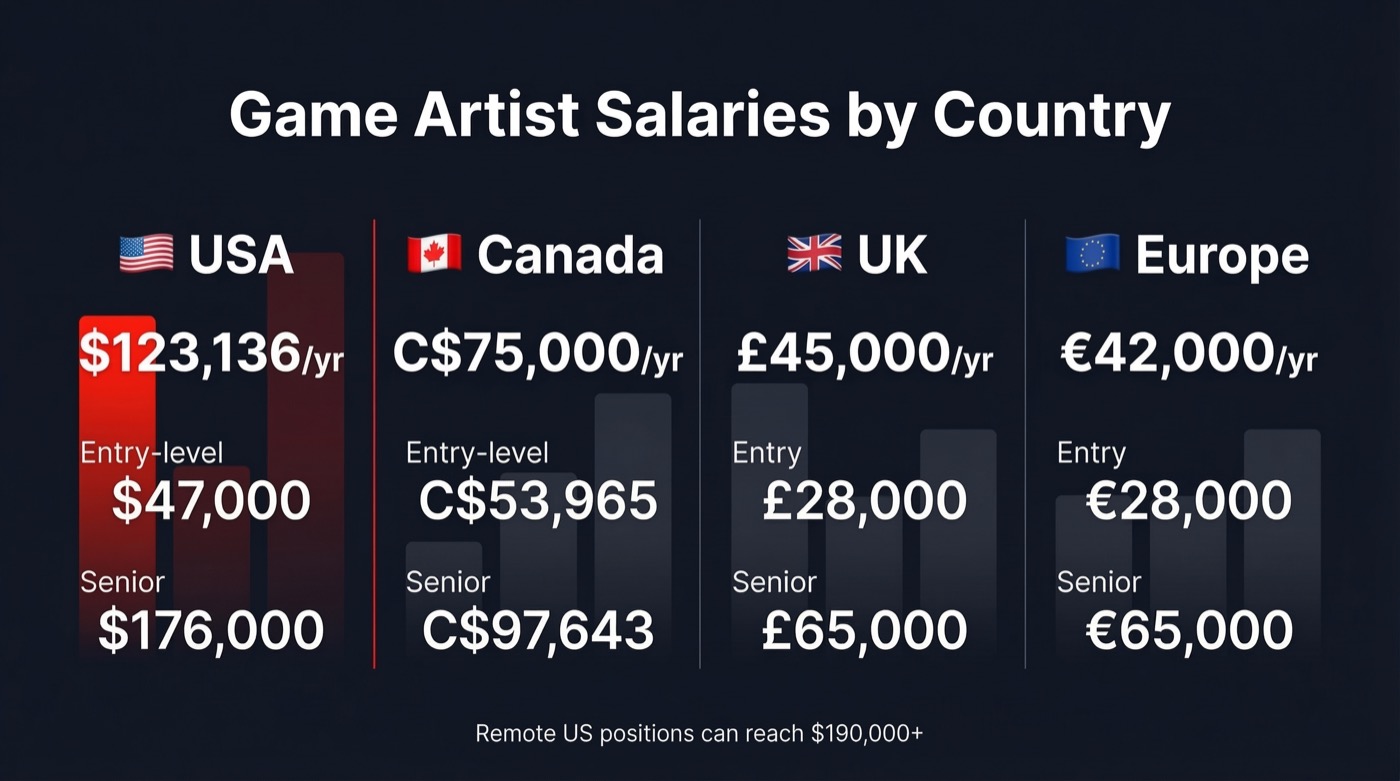
Game artist salaries by country vary dramatically, with US remote positions reaching up to $190,000 annually, Canadian artists averaging C$53,965 to $97,643, while European salaries remain underreported but estimated 10-20% below US levels. These differences stem from studio concentrations, cost of living adjustments, and the explosive growth of remote work opportunities post-2025.
Whether you’re a budding game artist planning your career path or an experienced professional considering relocation, understanding these international salary differences is crucial for maximizing your earning potential. This comprehensive breakdown reveals which countries offer the best compensation packages and what factors drive these disparities.
United States: Leading the Global Game Artist Salary Race
The United States dominates game artist compensation worldwide, offering the highest earning potential across all experience levels. According to ZipRecruiter’s 2025 data, remote game artists command an impressive average of $123,136 annually, with top earners breaking the $190,000 threshold.
US game artists typically earn $43.40 per hour on average, translating to over $90,000 yearly for full-time positions. Entry-level artists start at approximately $22.77 per hour, while experienced professionals reach $69.62 per hour in premium markets.
Top-Paying US States for Game Artists
Geographic location dramatically impacts earning potential within the United States. Major gaming hubs and high cost-of-living areas offer substantial premiums:
- District of Columbia: $118,800 average annual salary
- Maryland: $116,360 average annual salary
- California: $98,010 average annual salary (San Francisco reaches $145,076)
- New York: $60,000 to $100,000 range depending on experience
- Louisiana: $62,800 (lowest state average)
The remote work revolution has reshaped these dynamics significantly. Artists working remotely can access top-tier salaries without relocating to expensive coastal cities, with the 75th percentile earning $170,500 annually versus just $79,000 at the 25th percentile.
AAA Studios vs Indie Game Developers
Company size and type create substantial compensation differences. AAA studios typically offer $60,000 to $110,000 base salaries plus performance bonuses and comprehensive benefits packages. Independent studios generally range from $40,000 to $70,000, though equity stakes can potentially increase long-term compensation.
Canada: Competitive Mid-Range Salaries with Growth Potential
Canadian game artists enjoy stable, competitive salaries that reflect the country’s thriving gaming industry centered in Montreal, Toronto, and Vancouver. PayScale’s 2026 data shows video game artists earning an average base salary of C$53,965, while ERI Economic Research Institute reports higher figures of $97,643 annually or $47 per hour.
This salary range of C$67,764 to $118,929 positions Canada as a strong middle-ground option. While below US peaks, Canadian salaries offer excellent value when considering universal healthcare, lower education costs, and generally more affordable living expenses outside major urban centers.
Career Progression in Canada
Canadian salary growth follows predictable experience-based patterns:
- Entry-level (less than 1 year): C$36,000 starting salary
- Early career (1-4 years): C$48,980 average
- Mid-career (5-9 years): Approaching C$60,000-$70,000
- Senior positions (10+ years): C$80,000-$118,929
The Canadian dollar exchange rate and lower cost-of-living premiums compared to equivalent US cities contribute to these figures. However, strong government support for the gaming industry through tax credits keeps studios competitive for international talent.
United Kingdom and Europe: The Data Gap Challenge
Surprisingly, comprehensive 2025-2026 salary data for UK and European game artists remains scarce in authoritative sources. This information vacuum creates challenges for artists considering European opportunities or studios recruiting international talent.
Industry patterns and indirect evidence suggest UK game artists in London and other major studios earn between $50,000 to $90,000 USD equivalent. This aligns more closely with Canadian ranges than US peaks, influenced by different tax structures, national insurance contributions, and market dynamics.
European Market Considerations
Several factors likely contribute to European salaries tracking 10-20% below US averages. Higher income taxes, mandatory employer benefits, and concentrated studio locations in expensive cities like London reduce net take-home pay despite respectable gross salaries.
Post-Brexit visa complications have also impacted UK talent mobility, while EU countries benefit from freedom of movement allowing artists to pursue opportunities across multiple markets. Remote work opportunities from US and Canadian companies increasingly attract European talent seeking higher compensation.
Comprehensive Salary Comparison: Making Informed Decisions
| Country/Region | Entry-Level | Average Salary | Top Earners | Hourly Rate |
|---|---|---|---|---|
| United States | $22.77/hour ($47,000/year) | $90,000-$123,136 | $190,000+ | $43.40 avg |
| Canada | C$36,000/year | C$53,965-$97,643 | C$118,929 | $47 CAD |
| UK/Europe | $35,000-$45,000 (estimated) | $50,000-$90,000 (estimated) | $110,000 (estimated) | $24-$43 (estimated) |
How to Maximize Your Game Artist Salary Internationally
Strategic career planning can substantially increase your earning potential regardless of location. Follow these steps to optimize your compensation:
Step 1: Build a Specialized Skill Set
Focus on high-demand specializations like VR/AR development, mobile game optimization, or real-time rendering. Artists with technical art skills combining artistic talent with programming knowledge command premium salaries across all markets.
Step 2: Target Remote Opportunities Strategically
Apply for remote US positions while living in lower cost-of-living countries. A $120,000 US remote salary provides significantly more purchasing power in Montreal or Manchester than in San Francisco, effectively increasing your real income by 30-50%.
Step 3: Understand Total Compensation Packages
Look beyond base salary to evaluate healthcare benefits, retirement contributions, stock options, and professional development budgets. Canadian and European positions often include benefits that cost $10,000-$20,000 annually if purchased privately in the US.
Step 4: Research Cost of Living vs Net Salary
Calculate take-home pay after taxes, healthcare, and living expenses rather than comparing gross salaries. A $95,000 salary in Toronto might provide better quality of life than $110,000 in San Francisco due to housing cost differences of $2,000+ monthly.
Step 5: Consider Visa and Relocation Pathways
Investigate work visa requirements and immigration pathways for your target countries. Canada’s Express Entry system and US H1-B visas offer different timelines and requirements that impact career planning, while remote work may eliminate visa needs entirely.
Industry Trends Shaping Future Game Artist Salaries
The game artist compensation landscape continues evolving rapidly driven by technological and market forces. Understanding these trends helps you position yourself for maximum future earning potential.
Remote Work Revolution
Remote positions command salary premiums averaging 15-25% above traditional in-office roles as companies compete for global talent. This trend shows no signs of reversing, with studios embracing distributed teams to access specialized skills regardless of geography.
AI Tools Impact on Entry-Level Positions
Artificial intelligence tools for asset generation and workflow automation may compress entry-level salaries by 5-10% as productivity per artist increases. However, artists skilled in directing and refining AI outputs position themselves for senior roles with enhanced earning potential. Tools like Adobe Photoshop’s AI features are becoming essential for maintaining competitive edge in the evolving market.
VR and Mobile Gaming Growth
Virtual reality and mobile gaming sectors project 5-10% salary increases through 2027 due to talent shortages in these specializations. Artists transitioning into these niches gain competitive advantages in salary negotiations.
Key Takeaways for Game Artists Evaluating International Opportunities
Understanding game artist salaries by country requires looking beyond simple salary figures to evaluate total compensation, quality of life, and career growth potential. The United States clearly leads in raw earning potential with remote positions reaching $190,000, while Canada offers excellent mid-range salaries with superior work-life balance and benefits.
European opportunities remain underreported in salary data, creating both challenges and potential opportunities for artists willing to research specific studios and negotiate individually. The lack of consolidated UK and European benchmarks highlights a critical information gap for professionals considering these markets.
Remote work has fundamentally transformed the equation, allowing talented game artists to access top-tier US salaries while enjoying lower costs of living in Canada, Europe, or other global locations. This flexibility represents the single biggest opportunity for maximizing real income and quality of life in 2026 and beyond.
Ultimately, the best country for your game art career depends on your personal priorities balancing salary, benefits, career growth, lifestyle preferences, and long-term immigration goals. Armed with this comprehensive salary comparison, you can make informed decisions that optimize both your financial success and professional satisfaction. For those just starting out, our guide on how to get into game art without a degree provides valuable insights for launching your career in this lucrative field.
Frequently Asked Questions
What is the average game artist salary in the US compared to Canada?
US game artists average $90,000 to $123,136 annually, with remote positions reaching $190,000 for top talent. Canadian game artists earn C$53,965 to $97,643 on average, approximately 20-30% less than US counterparts. However, Canadian salaries offer better value when factoring in universal healthcare, lower education costs, and more affordable housing in cities like Montreal compared to equivalent US gaming hubs like San Francisco or Los Angeles.
Do remote game artists earn more than in-office positions?
Yes, remote game artists typically earn 15-25% more than traditional in-office roles. ZipRecruiter data shows remote positions averaging $123,136 annually compared to general averages around $90,000. This premium reflects companies competing for global talent and recognizing productivity benefits of remote work. Remote artists can also maximize real income by living in lower cost areas while earning salaries indexed to expensive markets like San Francisco or New York.
Which US states pay game artists the highest salaries?
The District of Columbia leads at $118,800 average annual salary, followed by Maryland at $116,360 and California at $98,010. San Francisco specifically reaches $145,076 due to concentrated AAA studios and astronomical living costs. However, remote work allows artists to earn these premium salaries without relocating to expensive states, significantly improving net income and quality of life compared to living in these high-cost markets.
How much do entry-level game artists make in different countries?
Entry-level game artists in the US start around $22.77 per hour or approximately $47,000 annually. Canadian entry-level positions begin at C$36,000 for artists with less than one year of experience, rising to C$48,980 after 1-4 years. European entry-level salaries are estimated at $35,000 to $45,000 USD equivalent, though reliable data remains limited. Geographic location, company size, and specific skill sets create significant variation within these ranges.
What factors cause game artist salary differences between countries?
Multiple factors drive international salary variations including cost of living adjustments, studio concentration in major cities, tax structures, healthcare systems, and market competition for talent. The US offers highest gross salaries but requires private healthcare and retirement savings. Canada provides lower gross pay but includes universal healthcare and stronger social benefits. Currency exchange rates, government tax incentives for gaming studios, and remote work policies also significantly impact real compensation across borders.
Are game artist salaries higher at AAA studios or indie companies?
AAA studios consistently pay 30-50% more than indie companies, offering $60,000 to $110,000 base salaries plus bonuses and comprehensive benefits. Indie studios typically range from $40,000 to $70,000 with fewer benefits but potentially offering equity stakes. However, indie positions often provide greater creative freedom, broader skill development, and more direct impact on final products. Many artists strategically alternate between AAA and indie roles to balance financial security with creative satisfaction throughout their careers.
How will AI tools affect game artist salaries in the future?
AI tools will likely create a bifurcated salary market over the next 3-5 years. Entry-level positions may see 5-10% salary compression as AI increases productivity per artist, reducing demand for basic asset creation roles. However, senior artists who master AI direction, quality refinement, and creative vision will command premium salaries potentially 15-20% above current levels. Artists investing in technical skills combining traditional artistry with AI tool expertise position themselves for the highest-earning roles as the industry evolves.
Curious about which game studios pay the most? We break down salary data by studio size and revenue.
Also see the game artist salary guide for a full breakdown by role and seniority level.
Looking for work? Browse open game artist jobs on ArtBlast, updated daily.